Accident insurance in Switzerland: what benefits are covered?

accident insurance

Accident insurance in Switzerland: what benefits are covered?

An accident is an event that cannot be predicted. It is all the more important to be well insured in the event of damage. Accident insurance in Switzerland therefore covers a large portfolio of services that are particularly important medically and financially. 

That is why the range of services offered by Swiss accident insurance companies includes the necessary support for medical treatment, necessary medical aids and aids, damages, rescue and transport costs, daily allowances as well as pensions and financial compensation.

accident insurance

Assumption of costs for care services

In order to minimize physical or psychological damage caused by an occupational disease or an accident at work, targeted and comprehensive treatment with the support of health insurance companies is always required. 

An important basis for occupational accident insurance is therefore Article 10 UVG (Federal Law for Accident Insurance), according to which the right to adequate treatment is unlimited in terms of costs or duration. This service includes treatments by doctors, chiropractors and stays in the hospital if necessary. 

In addition, thanks to the services provided by health insurers, those affected in Switzerland have the choice of which doctors and medical facilities they choose for treatment. The range of services includes the following services:

    1. outpatient or inpatient treatments
    2. dental therapies
    3. drugs
    4. analyzes
    5. cures
    6. Medical aids and aids (including prostheses, hearing aids)

In addition, the accident insurance covers up to a specified limit for any necessary transport and rescue costs as well as the transport costs for fatally injured policyholders and their burial. 

Assumption of cash benefits

In addition to benefits in kind, the Swiss Accident Insurance pays cash benefits such as daily allowances, compensation payments or disability and survivor's pensions. In Switzerland, the daily allowance has proven itself as a wage replacement benefit that comes into force if there are no pension entitlements or the insured are not fully able to work again. 

The reference figure is the last salary reached, from which policyholders receive a total of 80 percent of their last salary or partial amounts as daily allowance. Those affected are usually entitled to this right from the third day after their incapacity for work or the accident. The following example illustrates the entitlements to daily cash benefits:

    • Wages before an accident at work: CHF 2,670
    • of which full daily allowance (80 percent) or paid out (fully unable to work): CHF 2,136
    • of which paid (70 percent unable to work): CHF 1,495.20

Details on the disability and survivor's pension

However, occupational diseases and accidents at work are also regularly the reason why insured persons are no longer fully employable or can no longer work. That is why accident insurance guarantees pension benefits in order to compensate for the loss of wages. 

In order to assert these claims, insured persons are obliged to prove MdE - a reduction in their ability to work. The amount of the disability pension is based on the wages of the past twelve months. In the event of complete incapacity for work, there is a maximum pension claim of 80 percent of the assessment base.

Financial support for survivors

However, it is not only policyholders who benefit from Swiss accident insurance in the event of a claim. If the accident at work or occupational disability even leads to the death of the policyholder, spouses and surviving children may also claim the accident insurance under the law. 

To receive a widow's or widower's pension, the surviving spouses must meet certain conditions. For example, you are entitled to a lifelong pension if the spouses have pensionable children at the time of the widowhood or if pensionable children live in the household of the widowed spouse. 

In addition, the surviving children of the insured are entitled to a full or half-orphan's pension under Swiss law. The pension amounts are broken down into the following sentences:

    1. Widow's or widower's pension: 40 percent
    2. Orphan's pension: 25 percent
    3. Half-orphan's pension: 15 percent

However, the total amount of all pension claims must not exceed the maximum of over 70 percent of the total earnings of the deceased. Claims arising from divorced spouses are calculated at 20 percent of earnings and increase the maximum to up to 90 percent. However, the prerequisite for this is that the insured person would have had to pay maintenance during the insured event.

Who is automatically insured under accident insurance?

All employees are generally insured with accident insurance in Switzerland. This regulation also applies to homeworkers, apprentices, interns, volunteers, people working in apprenticeship or disability workshops, cleaning staff and domestic workers. In contrast, the self-employed or inactive people such as pensioners, housewives, students and children are not insured. 

For this reason, these groups of people are well advised to take out compulsory health insurance against accidents. If the weekly working time at an employer is less than eight hours, these workers are only covered against occupational diseases and accidents. In this case, non-occupational accidents are excluded from insurance cover. 

It's worth it health insurance comparison? For sure! Click here now and find the right insurance!

divide

Compare health insurance companies

Compare all health insurance companies quickly and free of charge.

These articles might also interest you:

An accident at work: Does the health insurance pay?

family insurance

An accident at work: Does the health insurance pay?

Nobody is immune from an accident at work, also known as an industrial accident. Inattention or a wrong hand movement is enough to cause serious injuries in the worst case. This is why employers in Switzerland are obliged to take out a policy with your health insurance against occupational accidents. 

If the employees work in the same company for at least eight hours a week, insurance against non-occupational accidents is also required.

family insurance

Differentiation between occupational accidents and non-occupational accidents

In Switzerland, insurance companies differentiate between so-called occupational accidents and non-occupational accidents. These two types of work accidents are characterized by the following special features:

    • Occupational accident: describes events that occur during work that are carried out on the instructions of the employer or in his interest
    • Non-occupational accident: accident that occurs on the way to work, while playing sports or otherwise in leisure time

An accident happened: and now?

After an occupational or non-occupational accident, employees are obliged to immediately inform the employer about the event. The employer then has the duty to report the accident to the insurance company immediately. 

Thereupon affected workers receive a form, which treating doctors have to fill out truthfully and completely. The insurance company is then immediately informed of the event, possibly via an online report. 

Accident insurance companies, public liability insurers, supplementary insurers of an employer or the casualty or disability insurance companies may be considered as potential service providers. Alternatively, providers for old-age and survivor insurance, pension insurance or liability insurance companies are available as potential service providers.

Are those affected entitled to continued payment of wages?

In Switzerland, employers are obliged to continue paying their employees 80 percent of their wages for a certain period after an accident. However, there are no clear rules regarding the duration of continued wages. 

For safety reasons, all employees in Switzerland are therefore compulsorily insured against the consequences of accidents. Only from the third day after the accident do those affected have a right to daily allowance that amounts to 80 percent of their wages. It is irrelevant whether the accident occurred during leisure time or during work.

Special regulations for employers with few hours of employment

Special regulations apply only to employees who work less than eight hours a week. These employees are only insured for accidents and occupational accidents that affect the way to work. Employers are obliged to pay the wages of these people in the amount of 80 percent for a certain period of time. 

In this case, too, the duration of continued payment of wages is not explicitly regulated by law. However, according to court practice, employers should consider a minimum of three weeks in the first year of service. 

However, if the employment relationship lasts longer, guidelines such as the Basler, Zürcher or Berner Skala come into force. These tables show the period over which employers have to pay wages depending on the number of years of service.

Can I be dismissed while unable to work?

After an accident, there is a high risk of being unable to work for a long period of time. Employers are then not entitled to dismiss their employees within a limited period of time. It is therefore all the more important to fully utilize the support provided by health insurance companies and to undergo the best possible therapy.

Are affected people allowed to work despite a medical certificate?

Those who are unable to work are also not allowed to work. Otherwise, workers run the risk that the Daily sickness insurance reclaims the daily sickness allowance. In the worst case, the insurance companies even file criminal charges.

Finding an accident insurance: A comparison helps

If employers want to take out accident insurance for their employees or if private individuals are interested in the policy, an insurance comparison in advance is highly recommended. 

Quotations from individual insurance companies differ significantly from one another. Anyone looking for the offer with the best price-performance ratio will receive a representative overview of the individual offers in an insurance comparison. 

These comparisons are now easily possible on the Internet. Entering a little information and data is enough to get detailed information about the insurance conditions and offers. 

The health insurance comparison really worth it! Click here now and find the best solution!

divide

Compare health insurance companies

Compare all health insurance companies quickly and free of charge.

These articles might also interest you:

Which vaccinations does the basic insurance cover?

family insurance

Which vaccinations does the basic insurance cover?

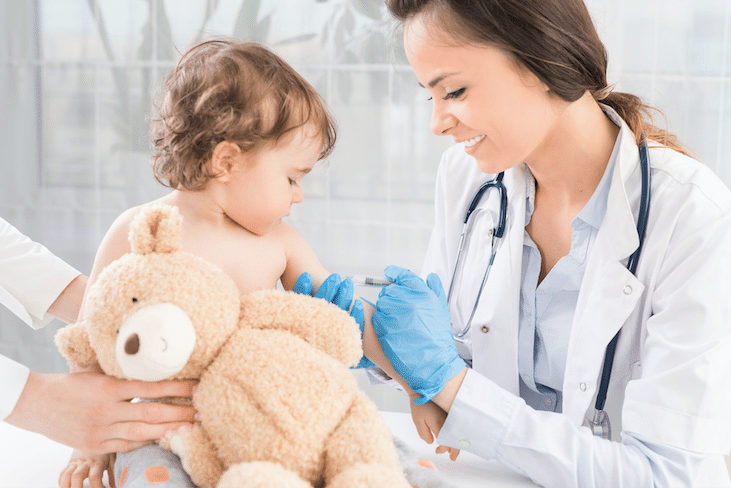
In Switzerland, basic insurance covers all basic vaccinations recommended for children, adolescents and adults. All these vaccinations are recorded in writing in the Swiss vaccination plan. 

In order to always keep up to date with the latest medical developments, the Federal Commission for Vaccination Questions, the EKIF, regularly updates this plan in cooperation with the BAG or the Federal Office of Public Health.

family insurance

There are three categories of recommended vaccinations in Switzerland:

    • recommended basic vaccinations for all ages
    • recommended additional vaccinations
    • Vaccinations that are recommended for special risk groups or risk situations

In addition to the basic vaccinations, vaccinations in the second category prevent clearly defined risks such as meningococcal infection. These vaccinations are of little use to public health. 

However, these vaccinations are extremely beneficial for the individual. The third category includes vaccinations, which are aimed at protecting particularly vulnerable groups of people, such as people with insufficient immune protection or premature babies. 

In addition, these vaccinations are recommended for people who are often in contact with vulnerable or sick people. These risk groups include, for example, doctors or nursing staff.

The basic insurance covers these vaccinations

Basic insurance bears the costs for subsequent vaccinations in general, but less the deductible and deductible:

    • Chickenpox (varicella)
    • Measles, mumps, rubella (MMR)
    • Tetanus (re-vaccinated every ten years)
    • Diphtheria (re-vaccinated every ten years)
    • Haemophilus influenza type B
    • Whooping cough (pertussis)
    • Polio (poliomyelitis)
    • pneumococcal
    • Hepatitis B
    • Hepatitis A (only for special risk groups)
    • Cervical cancer (HPV or human papillomavirus): if vaccination is given as a result of a cantonal program, the costs for girls from 11 to 19 years will be reimbursed
    • Influenza: vaccination for people at increased risk of complicated flu and for people aged 65 and over

Tetanus vaccination will be covered by SUVA after an accident if, according to the vaccination plan, vaccination against whooping cough is also recommended.

The basic insurance covers these recommended additional vaccinations

Subsequent vaccinations are covered by basic insurance in Switzerland with certain restrictions, which are also listed. One example is the meningococcal vaccination, the cost of which is covered by basic insurance for children from two to five years of age and young people from 11 to 15 years of age. 

However, basic insurance only bears the associated costs less the deductible and deductible. In addition, the basic insurance covers the costs of vaccination against HPV for women from 20 to 26 years and for male patients from 11 to 26 years. 

The insurance covers these costs, exempt from the franchise within the framework of cantonal programs. However, it is important that the first vaccination of the vaccination schedule begins before the 27th birthday.

Vaccinations based on certain risk factors

The vaccination recommended for risk situations or risk groups is usually paid for by the employer or the compulsory health care insurance. In addition, the basic insurance covers the costs for TBE vaccinations for people aged six and above, less deductible and franchise. 

However, this vaccination is only guaranteed for people who are increasingly in regions with TBE vaccination recommendations. In these cases, too, employers are obliged to pay for the vaccination, and their employees are increasingly in these areas for professional reasons. 

In return, vaccinations are excluded from coverage by the basic insurance, which are necessary for vacation trips. Rabies, yellow fever and Japanese encephalitis fall into this category.

The vaccination week: a special event

Switzerland has once again participated in the European Immunization Week, which is organized by the World Health Organization. This event is intended to encourage more and more people to regularly check their vaccination status. 

This vaccination week offers all Swiss residents the opportunity to read the electronic vaccination book at www.meineimpfungen.ch to be validated. If the check leads to the fact that vaccinations are due or are missing completely, the owners will be informed via SMS or email. 

Switzerland also supports the initiative in staying or becoming measles-free. 

It's worth comparing! Now here on the Click on health insurance comparison and find the best basic insurance!

divide

Compare health insurance companies

Compare all health insurance companies quickly and free of charge.

These articles might also interest you:

When is daily sickness benefit insurance useful?

family insurance

When is daily sickness benefit insurance useful?

Nobody is immune from a serious illness. Sooner or later, most people will be faced with the situation of being absent for a certain period of time due to illness and not performing any work during this period. 

But despite the lack of earnings, the costs continue. Anyone wishing to bridge this phase will certainly find important support with continued employer wages. However, the money is often not enough to maintain its previous standard of living. Precaution is therefore particularly important.

family insurance

Minimize risks in the event of illness

That is why insurance companies in Switzerland offer the so-called daily sickness benefit. In order to minimize your own risks, numerous employers in Switzerland automatically take out a daily sickness benefit insurance. 

Employees also benefit from this service, as the daily sickness allowance to some extent replaces lost wages. However, if there is no group insurance, the possibilities for this insurance model are still open. 

In this case, however, an individual insurance contract is required to receive daily sickness benefits from an insurance company.

Therefore, daily sickness benefits insurance makes sense

In Switzerland, employers are obliged to continue to pay their employees wages in the event of illness for a fixed period of time. Nevertheless, there are exceptions that quickly lead to a financial bottleneck for those affected. 

For example, if you are seriously ill and have not worked for the current company for three months, you will not be entitled to continued wages during the absence. The employer is only obliged to continue paying wages in the event of illness in accordance with the Swiss Code of Obligations, which is only three months later in Switzerland. During the first year of employment, employees who are ill are entitled to continued wages for up to three weeks. 

If, on the other hand, the employment relationship has existed for a long time, according to the legislature this entitlement increases to an "appropriately longer period". Individual cantons have so-called wage continuation scales on this subject. As a result, an employer grants his sick employee a continued wage payment of up to four weeks in the second year of employment on the Bernese scale. 

According to the Zurich and Basel scale, the duration in these cantons is extended to up to eight weeks under the same conditions. The most important advantages at a glance:

    • Continued payment of wages in the event of illness
    • financial security based on this

Collective insurance models for employees

However, these regulations make many workers worry. The Swiss daily sickness benefit provides appropriate financial protection. In fact, it is common practice in numerous companies in Switzerland to take out collective daily sickness benefit insurance for the entire workforce. 

Depending on the contract, these services even go beyond the statutory right to continued payment of wages. Corresponding agreements must of course be agreed individually in an individual or collective employment contract in each insurance contract.

Benefits for the self-employed

Group insurance aims to provide sickness allowance of up to 720 or 730 days in the event of illness-related incapacity to work. This benefit is usually due after a waiting period has expired. 

For employees, this regulation means that they only receive daily sickness benefits after the agreed waiting period has expired. However, the agreements are legally permissible, according to which employees receive only 80 percent of their income. 

The self-employed should opt for daily sickness benefit insurance to compensate for loss of income caused by an illness. 

For example, the self-employed are entitled to convert an existing collective sickness benefit policy into individual insurance within 30 days after changing from an employment relationship. However, if you have your own employees, you might be able to opt for group insurance for the entire company.

How expensive is daily sickness insurance?

The cost of this policy depends on whether you are self-employed, in a company or as a housewife. If you are employed, you usually assume 50 percent of the costs. Otherwise you will have to pay the full insurance premiums. The amount of the bonus depends on the following factors: 

    1. Are you covered by a group insurance or individual policy?
    2. What is your current state of health?
    3. What scope of services do you prefer?
    4. How long should the waiting period last until the daily sickness benefit is paid out?

For example, if you can get by for a short period of time without paying wages, you can reduce the cost of the policy with a longer waiting period. This model protects you in the event of longer downtimes. 

It's worth comparing! Now here click and find the right insurance!

divide

Compare health insurance companies

Compare all health insurance companies quickly and free of charge.

These articles might also interest you:

Swiss health insurance companies: When do children have to be registered?

family insurance

Swiss health insurance companies: When do children have to be registered?

The birth of a child is a blessing for families. However, in order for the boys and girls to be able to lead a carefree life right from the start, their own health insurance is urgently required in Switzerland. But what deadlines do parents have to meet after the birth of their offspring? What happens when the children see the light of day already sick? The following guide provides information.

family insurance

Rules laid down by the Health Insurance Act

In Switzerland, the Health Insurance Act stipulates that parents are obliged to insure themselves with the health insurance within three months of the birth of the child. The health insurance companies guarantee coverage in the event of an accident or illness. 

Insurance protection is mandatory in Switzerland. By registering, the boys and girls are automatically reinsured at the time of their birth. If parents let this three-month period pass, a gap is automatically created. 

In this case, the basic insurance is obliged to take in the child despite the late registration. In this case, however, the insurance company is free to refuse the services previously used.

Play it safe: With a registration before the birth of the child

Parents are therefore on the safe side in Switzerland if they register their new earthly citizen for basic insurance before birth. After the birth of a child, many families are in a state of emergency. The little ones demand everything from their parents. Organizational tasks are quickly forgotten. In this case, early registration will help.

Sick children are also included in the basic insurance

In Switzerland, health insurance companies are obliged to include sick children in basic insurance without reservation. However, if the mothers and fathers would like to register sick children for additional insurance after the birth, the insurance company may refer to a reservation or reject the application completely. 

For this reason, parents are well advised to apply for supplementary insurance before the birth. However, not all health insurance companies offer this service.

Choose your choice of supplementary insurance wisely

Parents are of course free to decide which additional insurance to choose in each individual case. Nevertheless, current statistics show that more and more children are dependent on expensive tooth corrections. Taking out dental insurance is also recommended immediately after birth. 

At a later stage, most providers of supplementary insurance in Switzerland require a comprehensive dental examination before the children are admitted to Switzerland. The offers of individual insurance providers differ significantly in some cases. The following additional insurance policies are also possible:

    • Supplementary insurance to cover the costs of contact lenses and glasses
    • Supplementary insurance for alternative forms of treatment
    • hospital insurance

Check the price-performance ratio of individual insurance offers

It is therefore all the more important to examine offers in detail - with a particular focus on the price-performance ratio. Another important factor is that numerous dental insurance companies include a waiting period of several months in their insurance contracts. 

This regulation has drastic consequences for policyholders. Under these circumstances, it is entirely possible that no treatment costs will be covered from the individual point in time of taking out insurance until the deadline expires. 

In this case, policyholders would have to pay for the treatment despite the insurance being taken out.

Think carefully about the choice of the cash register

In general, young parents should keep in mind that the selected health insurance company does not necessarily have to be the same insurance company as that of the parents. A comparison is worthwhile. Finally, differences can amount to several hundred francs. 

In general, boys and girls in basic insurance do not have a mandatory franchise. This means that parents only pay a ten percent deductible up to a maximum of CHF 350 per year. However, if the parents opt for a franchise of CHF 100 to CHF 600, they receive a premium discount. 

However, the franchise model usually does not make sense for children, since toddlers are closely examined and treated by the doctor. 

It's worth comparing! Now click here and Make health insurance comparison glow!

divide

Compare health insurance companies

Compare all health insurance companies quickly and free of charge.

These articles might also interest you:

Daily sickness insurance: details on the policy in Switzerland

health insurance

Daily sickness insurance: details on the policy in Switzerland

Although daily sickness benefit insurance in Switzerland is purely voluntary, many Swiss opt for this policy. In Switzerland, the OR, the so-called obligation law, is valid. However, the continued wages paid by the employee in the event of illness are often insufficient. 

This is where daily sickness benefit insurance comes into play. This policy covers full payment of wages even in the event of long-term incapacity.

health insurance

Financial security for sick people

Those who are temporarily unable to pursue their professional activity are often faced with a major problem. The self-employed have to use up their financial cushion. Housewives may have to look for paid care. 

Even employees who are entitled to continued payment of wages by the employer face problems. In the worst case, the incapacity to work lasts over such a long period that the entitlement to continued wages ceases to apply. 

In these and many other situations, daily sickness benefits promise financial security.

Benefits of daily sickness insurance

Daily subsistence insurance aims to secure the financing of one's own everyday life and lifestyle in the event of inability to work due to illness or an accident. In the event of illness, payment of up to 100 percent of the wages is in prospect. 

However, the type of insurance also has a significant impact on the respective conditions. Depending on the type of daily sickness benefit insurance, the sum insured can be paid out for up to two years. If you accept a longer waiting period for payment of the daily allowance due in the event of unemployment, this fact also has a positive effect on the amount of the premiums. 

Daily allowance insurance offers potential policyholders in Switzerland a high degree of flexibility. Depending on the amount of the daily sickness allowance and the waiting time, the policy offers extensive design options. However, this flexibility gives every policyholder the opportunity to adapt the conditions to individual requirements. The most important advantages at a glance:

    • financial security despite illness
    • Insurance conditions can be adjusted individually

No assumption of costs in the event of unemployment

Even if it may sound a bit strange at first, there is an agreement in the employment contract about a? Loss of insurance benefit? can have a serious impact on the use of daily sickness insurance. 

If an employee cancels or receives the termination, it is entirely possible to lose the insurance as a policyholder. A similar case occurs for the self-employed who are insolvent after a long illness, have to sell their business or have to give up. 

Potential policyholders avoid these risks by taking a close look at the insurance conditions. Because there are now many insurance law agreements in which details such as these are interpreted in favor of policyholders.

Special features of a daily sickness allowance for the self-employed

The self-employed also take advantage of completely different options. These policyholders are often free to individually determine the start of payment and the amount of the sum. As a rule, those affected have a right to receive the benefit from the 14th, 30th or 45th day of illness. 

All in all, the benefits should correspond approximately to the value that arises from the loss of earnings. Nevertheless, the self-employed benefit from a particularly large number of advantages. In addition to maintaining the usual standard of living, the policies also offer protection against incapacity to work in maternity. 

All of these advantages are reason enough to seriously consider taking out daily sickness benefit insurance. Ultimately, personal protection primarily serves a purpose, your own recovery. 

Swiss health insurance companies cover the costs necessary for physical and mental recovery. However, the healing process will certainly progress faster if those affected weigh in financial security during this difficult time.

Health reservations

If the insurance companies request a declaration of their current state of health when they join the policy, potential policyholders must also truthfully complete the document. 

If the potential policyholders do not disclose certain facts or provide the information incorrectly, there is no entitlement to insurance protection in the event of a benefit - on the premise that there is a connection between the medical cause and the benefit. 

In practice, however, most insurance companies increasingly offer so-called full insurance. This means that every worker can be admitted without a prior health check. 

If the companies offer this insurance option, there are no benefit restrictions for existing diseases. 

health insurance comparison useful? Indeed! Click here now and find the right insurance!

divide

Compare health insurance companies

Compare all health insurance companies quickly and free of charge.

These articles might also interest you:

Children's glasses: What costs does the health insurance cover?

family insurance

Children's glasses: What costs does the health insurance cover?

Many children rely on visual aids like glasses. Worldwide comparisons show that myopia is increasing rapidly everywhere. This development does not stop at children who are based in Switzerland either. 

But if you need visual aids like glasses, you have to expect relatively high costs. In Switzerland, it is entirely possible that health insurance companies support policyholders with financing. The insurance companies may even participate in the financing of contact lenses.

family insurance

The basic insurance includes a participation for visual aids for children

In general, the so-called basic insurance in Switzerland is obliged to provide visual aids for children and adolescents up to the age of 18. Disability insurance, IV. 

This policy covers the costs. This includes most medical services that are related to so-called birth defects. 

Since these services also include visual impairments, the insurance companies in this case bear the cost of visual aids up to the age of 20 without a deductible.

An annual share of CHF 180

In Switzerland, children and adolescents who rely on visual aids receive an annual share of CHF 180 from their basic health insurance for contact lenses or glasses. However, an annual ophthalmological prescription is required to bill the health insurance company for these costs. 

Those who meet these requirements will benefit from this amount paid by the insurance until they are 18 years of age. Experience has shown that insurance companies pay higher reimbursements for contact lenses or spectacle lenses if people even suffer from a particularly severe visual defect or a related illness.

 This case occurs among other things with the following diseases or under the following circumstances:

    • in diseases of the cornea
    • an adjustment necessary after an operation
    • in the event of a refractive change due to illness

In general, parents in Switzerland are well advised to have their children examined regularly for possible ametropia. After all, most visual defects require therapy as early as childhood so that visual acuity is not restricted in the future.

With basic insurance, the payment of a deductible is included

Experience has shown that parents still have to pay a deductible for the provision of contact lenses or glasses. If, however, parents have opted for a franchise for their children that is higher than zero francs, policyholders must assume the respective franchise amount and the deductible of 10 percent on their own. 

Insurance experts therefore advise you to generally opt for a franchise of zero francs. After all, the discount on a higher franchise is comparatively small.

Good supplementary insurance is often a sensible solution

It may also make sense for affected parents to save cash by taking out additional insurance. However, a look at the details is required, since the benefits for supplementary insurance vary considerably from one health insurance to another. 

This step is particularly worthwhile for children and adolescents who are permanently dependent on the support of a visual aid. Experience has shown that contact lenses and corrected glasses ultimately cost more than CHF 180 per year.

Is a franchise recommended for children?

Actually, the amount of the franchise does not affect the additional payment for the children's glasses. In general, experts in Swiss insurance law also suggest agreeing a franchise of CHF 0 for children and adolescents. 

The insurance specialists cite the reason that the prospects for a discount on a higher franchise in Switzerland are relatively slim. To make matters worse, children and adolescents need a medical consultation comparatively often. 

If adults are dependent on glasses and contact lenses, other regulations apply. The compulsory basic insurance valid for Switzerland only provides financial support for visual aids under certain conditions. 

Now try the health insurance comparison here and find the right additional insurance!

divide

Compare health insurance companies

Compare all health insurance companies quickly and free of charge.

These articles might also interest you:

Family insurance: Free health insurance membership?

life insurance

Family insurance: Are there options for free health insurance membership?

Anyone who is already resident in Switzerland or would like to settle in the country is subject to compulsory health care insurance. For Swiss citizens, this means that every family member must take out basic insurance.

life insurance

There are no family insurance schemes in Switzerland

Around 90 health insurers are located across the country, from which policyholders can choose their favorite insurance company.

The range of services offered by individual health insurance companies is no different. But if you want to upgrade the basic package by taking out additional insurance, you should take a close look at individual offers.

In line with the German system of private health insurance, policyholders pay non-income-related head premiums, which however vary from canton to canton and from health insurance to health insurance. However, in contrast to the German health insurance system, there are no family insurance schemes in Switzerland.

Reduced contribution rates for children and adolescents

Children and adolescents up to the age of 18 still have an advantage. In Switzerland, reduced contribution rates apply to certain groups of people. The following policyholders benefit from these regulations

    • children
    • youth
    • young adults
    • Low income people

A sample calculation provides information

A breakdown of the costs required for health insurance in Switzerland may seem confusing at first. But a look at the details reveals that this composition is still clearly subdivided. 

In general, insured people usually have to pay part of the treatment costs. The general contributions for health insurance are comparatively low. However, the cost contribution is also added to these costs, which in turn is calculated from a deductible of the invoice amount of 10 percent and the ordinary franchise. 

This model can be quickly explained using this calculation example.

There is no proper franchise for children and young people

In this example, policyholders have to pay a monthly contribution of 250 euros for the health insurance. The annual franchise is added to this, which in this example is CHF 300 per year for adults. 

This is where family-friendly Swiss politics comes into play. Because children and adolescents up to the age of 18 do not have to pay a regular franchise in Switzerland. This is offset by the deductible, which amounts to ten percent of the annual treatment costs. 

If treatment costs totaling CHF 2,000 have been incurred in the course of a year, the sum of the ordinary franchise is subtracted from the invoice amount. In addition, 10 percent of the deductible of the remaining 1,700 francs will be charged by the health insurance company. 

Based on this, a policyholder would only pay CHF 470 of the entire treatment fee, plus the monthly health insurance contributions. Accordingly, the maximum deductible is CHF 700 per year. 

For children and adolescents up to the age of 18, the share is reduced to CHF 350. If you want, you can also increase the proportion of the ordinary franchise in order to minimize the deductible if necessary.

Financial benefits for younger people

This example illustrates that there is no family insurance in Switzerland like in Germany. Nevertheless, children, adolescents and young adults benefit from some advantages that the Swiss health system offers them. 

Are there options for free health insurance membership? These options do not exist in Switzerland. Nevertheless, younger people are comparatively little asked to pay.

How children and young people join the health insurance system

Children up to the age of 18 are automatically covered by basic insurance after their birth. After the birth of a child, parents are obliged to register the newborn with a health insurance company no later than three months after the birth. 

When deciding for or against health insurance, potential policyholders are free to choose. The benefits of this basic insurance for children, adolescents and adults in the basic insurance are identical for all health insurance companies. 

However, the amount of the premiums differs significantly from provider to provider. If in doubt, it is advisable to compare offers from different providers online. 

Too difficult to compare? No! Now with ours health insurance comparison find the right health insurance!

divide

Compare health insurance companies

Compare all health insurance companies quickly and free of charge.

These articles might also interest you:

Swiss health insurance 2020: some premiums will decrease

Swiss health insurance 2020: some premiums will decrease

Premium payers from Switzerland can look forward to good news. Several health insurance companies have announced in the past few days that the bills for the health insurance company will be somewhat lower from 2020. 

For example, Helsana boss Daniel Schmutz told NZZ that a large part of all customers will have to pay a lower premium than in 2019 from next year. In addition, CSS - Switzerland's second largest health insurance company - has meanwhile announced that premiums in certain cantons will be reduced or at least not increased.

Six of the nine largest insurance companies confirm stable premium levels

According to initial surveys, six of the nine largest health insurers in Switzerland expect a stable development of the premium amount in 2020. The most important reason given by insurance companies is health care costs, which have grown exceptionally moderately in the past. 

The first insurance companies speak of a rethinking of policyholders, which is increasingly affecting the scope of services offered by health insurance companies. According to statements by Helsana chairman Schmutz, fewer and fewer policyholders are turning "at every trifle" to a doctor.

Saving money: by opting for alternative insurance models

It is also a relief for insurance companies that insureds are increasingly opting for alternative insurance models. These types of insurance are cheaper and more efficient at the same time. Dirt also mentions the Federal Council's support in the Tarmed medical tariff. This change will also benefit insurance companies and policyholders.

The financial turnaround is probably already decided

Although the Federal Council has yet to approve the health insurance premium proposals, the financial turnaround for some large health insurance companies seems to have been decided. However, while Helsana boss Schmutz speaks of a lower premium, the CSS limits the zero rounds and falling premiums to certain cantons. 

However, the health insurance companies are not yet allowed to publicly announce which cantons or regions are being discussed. This final decision will probably not be announced until the end of September after the Federal Council has approved the proposals.

Premium cuts in individual cantons: initial assumptions

Nevertheless, specialists such as Felix Schneuwly from the Comparis comparison service make a first forecast. According to his statements, premiums are likely to decrease primarily in the cantons, which have particularly moderate hospital costs. 

According to an analysis of the so-called BAG monitoring, the cantons and regions of Aargau, Appenzell, Basel-Land, Basel-Stadt, Bern, Glarus, Graubünden, Neuenburg, Nidwalden, Schwyz, Uri, Schaffhausen, Solothurn, Ticino and Valais could benefit from this forecast to be affected.

Not all insurance models are affected by the premium reduction

Currently, it can only be speculated as to which insurance models are affected by the premium reduction. But Schneuwly also makes a first forecast in this context. In his opinion, a reduction of the telemedicine, HMW and family doctor models is relatively likely. 

However, a look at the development of the total costs shows that the premiums for health insurance in Switzerland will nevertheless rise on average. In this context, the CSS has already confirmed that a slight increase of less than 1.5 percent is expected. 

Helsana goes one step further and predicts an increase in premiums of less than 1.2 percent in 2020. With these values, the cost increase for 2019 would have been undercut.

The beginning of a turnaround?

Could this adjustment of premiums for health insurance companies in Switzerland herald a turnaround? Insurance expert Felix Schneuwly has not yet assumed this. In his opinion, the supervisory law is a relatively big hurdle. 

According to Schneuwly, the supervisory law focuses on short-term cost development. In the past, these circumstances often ensured that fluctuations in premiums were much stronger than for the comparatively steady cost development.

The main reason for the price increase: the use of medical offers

As early as the summer, the comparis.ch comparison service assumed that the premiums for basic insurance from Swiss health insurance companies would increase by two to three percent in 2020. Comparis based this thesis on the fact that it is not the prices, but the use of medical services that drives up the premium. This assertion does not seem to have been confirmed now, as the current development shows.

A financial relief for families and cantons

Many policyholders from Switzerland should be particularly pleased with this price development. For many families, increased health insurance premiums represent a high financial burden, which family budgets are above average. 

This means that families are no longer able to make the premium payments. These missing payments in turn represent a high burden for the cantons. In general, cantons take on 55 percent of all services that are incurred for patients for hospital treatment in hospitals. 

In addition, the development harbors another risk. If the reduction in premiums goes hand in hand with less frequent use of medical services, the risk increases that serious illnesses of policyholders remain untreated.

Premium reduction vs. saving model

Despite the reduction in premiums, policyholders need to consider basic insurance offers carefully. Because although numerous insurance companies have announced reductions in premiums, policyholders still pay quite high fees in a direct comparison. 

For this reason, premiums from insurance companies with the highest price reductions are usually still many percentage points more expensive than offers from other insurance companies. One example is the Philos family doctor insured in Zurich with a franchise of CHF 2,500. Anyone who decides to switch to Assura in this region saves over CHF 600. 

In addition, well-known health insurance companies such as Helsana or CSS are also not among the associations with the highest premium reductions. 

To compare? It's worth it! Use the now Health insurance comparison at neotralo.ch
divide

Compare health insurance companies

Compare all health insurance companies quickly and free of charge.

These articles might also interest you:

Supplementary insurance: what you have to pay attention to

Supplementary insurance: what you have to pay attention to

Supplementary insurance: what you have to pay attention to

Would you like to have the cost of your glasses worn? Do you want to treat yourself to a flu shot this year? The bill for your daughter's psychotherapy falls into the house? These costs can be covered by additional insurance. This article explains what to look for.

Supplementary insurance: what you have to pay attention to

Find the right supplementary insurance

The selection of supplementary insurance is large, but equally confusing in equal parts. Insurers are prepared for almost any eventuality.

In times when you can choose from 16 different types of coffee, the choice of supplementary insurance is particularly difficult. Especially when it is considered that the transaction will also cost you money. If the supplementary insurance is not used, you have shot a lot of money into orbit.

In Switzerland there are supplementary outpatient insurance and supplementary hospital insurance.

Additional outpatient insurance

hospital insurance

- dentistry

- ambulance

- preventive healthcare

- visual aid

- psychotherapy

- alternative medicine

- General department all over Switzerland

- Semi-private department all over Switzerland

- private department all over Switzerland

These are just a few examples of the outpatient supplementary insurance that must be taken out privately.

Take out additional insurance

In order to take out additional insurance, you need not only the necessary payment power but also:

    • a place of residence in Switzerland
    • a minimum age of 18 years
    • successful completion of a health examination
    • positive acceptance notice from the cash register

Since it is not easy to get a positive notification of admission to the health insurance company, the choice of health insurance company should be carefully considered. The list of supplementary insurance is long. These are often called nursing supplements, although they have nothing to do with nursing services.

One tip is that benefits are often taken over by some health insurers that were not mentioned in the insurers' brochures. Here it is advisable to ask beforehand.

Additional services failed

Many Swiss people fear that they will make a mistake. The rule of thumb here is:  You are adequately protected by the compulsory health insurance in Switzerland. Anything beyond that is luxury. However, this will help you a health insurance comparison.

You cannot make a mistake by definition when taking out supplementary insurance. At most, if you don't use them in the end, you've lost money. If you regret in old age that you have not taken out additional insurance, this regret is the only mistake, because then you have to bear the costs yourself.

For many insured persons, one pays off in the end hospital insurance not at all. You pay the high premiums over the years and often do not use the services at all. This is annoying.

You should also note the waiting periods for the use of supplementary insurance: The insurance contracts often state exactly when the insurance company must pay for your treatment. In the worst case, you are already healthy and no longer need insurance.

Cancel and change supplementary insurance

Insured persons often stay with an additional insurer for the rest of their lives. If you do want to cancel and switch, you should note that the cancellation period for supplementary insurance is different from that for basic insurance. Instead of one month, you have three months' notice, so your insurer must have received notice of cancellation by 30 September at the latest.

Tip: Wait until you have written confirmation from your new insurer. Otherwise, you may still risk standing without additional insurance.

Insurance with different health insurance companies: is that possible?

When choosing a suitable supplementary insurance, you should consider one thing: You do not necessarily have to take out your basic and supplementary insurance with the same health insurance company. If you have nevertheless opted for all policies with one provider, policyholders can easily use the basic insurance with another insurance company. 

In individual cases, however, it is possible for policyholders to lose discounts on supplementary insurance previously received. Please also note that individual additional policies have longer notice periods or other notice dates. Precise information can be found in the letters you have received from the insurance company. 

It is worth comparing supplementary insurance! Now here click and compare all supplementary insurance!

divide

Compare health insurance companies

Compare all health insurance companies quickly and free of charge.

These articles might also interest you: