Not without risk: Cyber risks are underestimated in the home office

Not without risk: Cyber risks are underestimated in the home office

The switch to work in the home office was a success in the corona-shattered year 2020. Most SMEs do not report any problems in this regard. What has been underestimated, however, are the cyber risks, from which companies are now more threatened than ever.

Establishing work in the home office

The first lockdown was declared in spring 2020, which presented many SMEs with unexpected problems. From one day to the next, they had to completely reorganize their operations and send as many employees as possible to the home office. What was initially seen as problematic turned out to be easier than expected in practice. Small businesses in particular were able to respond well, as a survey showed. Their bosses are unanimously of the opinion that the switch to the home office worked well and that around two thirds of the employees were able to do their work from home very well.

In the meantime, working in the home office has established itself and very many companies have not completely abandoned it. After all, this work variant also has advantages. The work-life balance is better, the risk of infection is lower and many employees are more motivated and efficient when they can organize their time themselves. However, not all that glitters is gold and there are certainly problems. In particular, the risk of cyber attacks was significantly underestimated. Around a quarter of companies have so far been affected by a cyber attack, around a third of which suffered financial damage. Apparently, the companies had underestimated the risks associated with moving jobs to the workers' own four walls.

Apparently there is no risk awareness

One reason for the increased attacks, some of which were successful, could be the lack of risk awareness among many employees. In addition, according to current knowledge, only around half of the companies have an emergency plan on hand that is used if a cyber attack prevents the continuation of day-to-day business. Only two thirds of all companies regularly train their employees on the risks arising from digitization and on cyber security measures. Many SMEs do not yet have a security concept. According to surveys, only one in ten CEOs is aware of the high risk that the entire company can be incapacitated by a cyber attack.

The other managing directors perceive the risk as low or act according to the motto that nothing will happen to their company. The fact is that many SMEs are far too naive and do not take cybersecurity seriously enough. According to experts, there are still many gaps to be closed here.

A total of 503 managing directors were interviewed for the statements at hand; the survey itself was carried out by the GFS Zurich. Digitalswitzerland as the umbrella organization of SMEs, the National Center for Cybersecurity, the University of Economics (University of Applied Sciences Northern Switzerland), Mobiliar and the Swiss Academy of Technical Sciences commissioned the study.

Conclusion: Cyber risk is greater than expected

The relocation of numerous employees to the home office has been very successful since spring 2020. However, it turns out that the risk of cyber attacks has been significantly underestimated. Around a quarter of the companies that have sent some of their employees to work from home have been victims of a cyber attack in the past few months. It is important to make improvements here and to increase employee awareness of such risks. At the same time, the SME insurance should be optimized for this risk.

divide

Insurance for SMEs

Compare all providers in Switzerland quickly and free of charge.

These articles might also interest you:

Travel environmentally friendly: Switzerland has an e-bike tour operator

Travel environmentally friendly: Switzerland has an e-bike tour operator

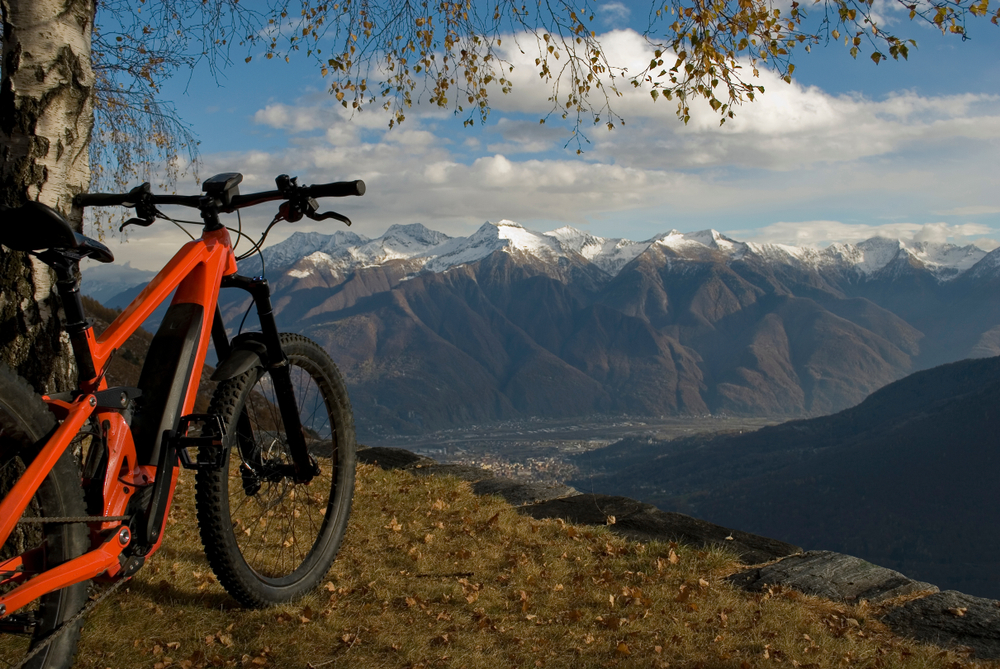
E-bikes have increased more and more in recent years. Wherever you look you will find these bicycles with electrical assistance, which allow old and young to be more mobile. Is there a tour operator in Switzerland that specializes in the most beautiful bike tours in Europe? with the e-bike!

Increased sales figures for e-bikes

Like the normal bicycle in the past, the e-bike has now also conquered the streets. This can be seen not only by looking at them, but also by examining the sales figures: In 2019, 133,000 e-bikes were sold in Switzerland and thus accounted for around a third of all bicycle sales. No concrete figures are yet available for 2020, but it seems that sales will have increased by around 25 percent compared to 2019. The current Corona year may also have had its share in this, in which the fitness studios were closed and people were increasingly looking for opportunities for physical exercise in the great outdoors.

The advantages of e-bikes are obvious: They can be used to travel half the world, because if muscle power alone is no longer sufficient, why not rely on the support of the integrated electric motor? This supports pedaling at least up to a speed of 25 km / h, which allows travelers to cover a considerable distance during the day. This means that entire groups with different levels of ability can be on the road, and even weaker cyclists can easily keep up with the others. Cycling becomes more relaxed and is particularly relaxing in the hilly to mountainous landscapes of Switzerland.

New tour operator offers pure e-bike tours

Why not use the advantages of e-bikes for a commercial offer? This is probably what the founders of e-Biketours.ch thought, the first tour operator in Switzerland to only offer e-bike tours. Initial tests have already predicted the possible success of the offer and 47 different trips can now be booked. They lead through the most beautiful landscapes in Europe: The tours offered by the tour operator go past rivers, along the coasts and through the Alps.

Bike travel professionals carefully prepare the tours, find the most beautiful rest stops and sights of a cultural and scenic nature that can be approached on the way. The well-known classics such as the Alps-Adriatic Cycle Route, on which the participants ride the Julian Alps to the Mediterranean. Of course, the Danube cycle path is also part of it and leads cyclists from the Wachau to Vienna. Or how about the Swiss Heart Route that goes from Lausanne to Lucerne?

Numerous trips can be booked with the above-mentioned tour operator and it is to be expected that new travel routes will constantly be added should the previous success of the offers continue. All trips start at a central entry point, with three of these locations currently being offered:

    • Horw
    • Bern
    • Spreitenbach

The tour group gathered at one of these locations is brought to the respective destination by coach, the e-bikes are transported in the bicycle trailer. By the way, everyone can also use their own e-bike if they don't want to rent one! In addition to the chauffeur, two bike tour guides will lead the tour, the group size is limited to a maximum of 15 participants. The daily stages are easy to manage, nobody has to start fitness training before a cycling holiday in order to get the necessary endurance! In addition, culture and gastronomy should not be neglected on the way, so enough breaks are planned so that even untrained participants can sufficiently recover.

The total package, which can be booked by the holidaymaker, includes the pick-up and drive to the destination, accompaniment on the tour as well as food and admission to events or cultural highlights with an expert guide.
The trips can be booked directly online and have a twelve percent discount if they are picked by travel agencies. There is currently no travel catalog, but this is already in progress.

Conclusion: Europe can be experienced with the e-bike

Anyone who wants to experience Europe in the truest sense of the word now has the best chance: In Switzerland there is the first tour operator who specializes solely in tours with the e-bike. Have fun cycling!

divide

Find travel insurance

Compare all providers in Switzerland quickly and free of charge.

These articles might also interest you:

Premium money: Not all health insurance companies are economical

Premium money: Not all health insurance companies are economical

So far, the health insurance companies were not very economical in terms of premium money. However, according to new surveys, they are now handling the contributions more efficiently, even though the differences between the insurers are still very large.

Higher premiums due to greater administrative effort?

How efficiently a health insurance works is usually measured by the amount of its own administration costs. How much money does the health insurance company need for its employees and their salaries, how much does their own property cost and what is the annual amount for advertising and marketing? Exactly these costs make a big difference between different health insurances. While some are very economical, others drive up their own costs. True to the motto: What does the world cost?

However, current findings show that higher administrative costs do not necessarily mean that the health insurance in question is less efficient. The decisive factor is how the expenses are used and what premium income is offset by the expenses. In addition, higher administrative expenses do not necessarily mean that the premiums also have to be high, because they are only partially used to pay the administrative costs. A very small part, because at most health insurers the share of administrative costs does not even reach 4.5 percent, which are paid by the premium money.

Big differences among health insurers

A comparison shows that the differences between the individual health insurances are quite considerable. Here are two examples:

    • Visana
      With this health insurance, the insured pay around 3,700 francs per year. The administrative costs per person are around 127 francs, provided that this person is included in the basic insurance.

    • Helsana
      Here the average premium for an insured person is around 4,100 francs per year. However, the administrative costs for a person in the basic insurance are significantly higher and amount to around 212 francs.

Helsana tries to justify itself and declares that around 94 cents flow back to the insured person in the form of a benefit, and that for every franc that is paid in as a premium. This means that the real administrative costs are significantly lower and only amount to six cents per premium franc.

Don't see costs as a sign of quality

Experts assume that the expenditure that a health insurance company makes for its own purposes and which therefore falls within the scope of administrative costs cannot necessarily be seen as a good or poor quality health insurance. Cash registers that offer a very good quality of service are not represented per se with higher administrative costs. At the same time, not every cash register that has low costs for its own administration can offer poor service.

However, one thing is noticeable and this is common to all health insurances: the costs for your own administration have fallen by around 50 percent in recent years. However, the administrative costs are only seen in connection with the premiums or put in relation to them. Nevertheless: The differences between the individual health insurance companies still exist and it remains to be seen that the insurance companies work with different levels of efficiency. While some have only minimal costs, others make full use of what ultimately says nothing about the service offered.

Conclusion: Not every health insurance company saves on administrative costs

Some health insurance companies are constantly striving to keep their own costs as low as possible and allocate these lower costs to the premium money. Others are anything but efficient and thus increase health insurance contributions. However, the administration costs say nothing about the service of the cash register.

divide

Compare health insurance companies

Compare all health insurance companies quickly and free of charge.

These articles might also interest you:

VW sham engines: wave of lawsuits in Switzerland ended

VW sham engines: wave of lawsuits in Switzerland ended

The Federal Supreme Court has now come to an end and denied the Foundation for Consumer Protection the ability to take legal action. The wave of lawsuits in Switzerland has now ended and there will be no more compensation.

Federal court ruled on the litigation capability

The Foundation for Consumer Protection stood up until August 2020 for around 6,000 motorists who had been cheated by the VW cheat engines. The foundation wanted to achieve compensation that should go to those affected by the manipulation of the exhaust gas values. But now the Federal Supreme Court has denied the foundation's ability to take legal action, thus putting an end to the long-standing debates and demands. The verdict now clearly shows how little protected consumers in Switzerland really are. There does not seem to be any legal protection even for such obviously illegal things. This is how consumer protection expressed itself in its press release after the court ruling.

While in other countries VW was condemned for its approach and had to pay compensation there, the Swiss are said to be denied this. VW already had to pay billions for cheating! The Foundation for Consumer Protection is now concerned with ensuring that the class action procedure is firmly anchored in the Swiss legal system.

Incomprehensible judgment?

The managing director of the Foundation for Consumer Protection stated that it was incomprehensible why the judgment of the Federal Supreme Court was issued in this form. However, the judgment is now clear and was probably declared a failure because of formal questions. The VW emissions scandal must now be settled in Switzerland for procedural reasons. The courts were unable to examine VW and AMAG's obligation to pay compensation.

Around 170,000 car owners are affected by the cheating in Switzerland alone, but only 6,000 of them joined the class action lawsuit. The fact that the Foundation for Consumer Protection, which is supposed to help in precisely such cases, has now been unable to do anything or achieve anything, according to its managing director, only shows that collective legal protection absolutely needs to be strengthened again.

Consumers in Switzerland are currently exposed to the machinations of the companies without any further protection and have to rely on their own financial resources if they want to defend themselves. But not everyone can do that, especially since every process involves a certain financial risk. Anyone who cannot or does not want to accept this is left with their damage.

Collective legal protection has now simply been removed from the code of civil procedure, which just underlines the need for the Foundation for Consumer Protection, the legal remedy? Class action? to finally strengthen it further or to establish it at all. Nowadays, the class action is seen as almost indispensable and yet it is not anchored in the Swiss legal system.

This should be fixed in the future. The ways in which the class action will now become legally legitimate and what the foundation would like to do about it has not yet been clarified. The fact is, however, that VW got away with it and was able to enjoy the backing of the legal system in Switzerland with its cheating.

Conclusion: No more wave of lawsuits about VW

VW apparently got off well with its exhaust cheating in Switzerland, because the legal remedy of the class action is not anchored here. This means that such a lawsuit has no justification, which was shown by the rejection of the class action filed on behalf of 6,000 victims. The Federal Supreme Court denied that the Foundation for Consumer Protection was able to take legal action. This now wants to fight to ensure that the class action is firmly anchored in the legal system of Switzerland.

divide

Find legal protection insurance

Compare all providers in Switzerland quickly and free of charge.

These articles might also interest you:

Swiss Life and 3a customers: Business first!

Swiss Life and 3a customers: Business first!

The Swiss insurers have the well-being of the insured in mind. But for some, customer friendliness only goes as far as it serves your own good. One example of this is Swiss Life.

Together for Switzerland and your own business

Slogans like? Together for Switzerland ?, but when it comes to business, everyone seems to be next to himself. This also applies to the insurance companies that have now shown those insured with 3a that they can do different things. So Swiss Life offered a product called? FlexSave Duo? and that should generate investment profits every month. Returns of between five and ten percent were promised, and the indices should not fall into negative territory.

Customers should then only drive a zero lap. The offer was well received, many customers jumped up and even reported on the great returns that have been recorded in recent years. Things went really well on the stock markets, and the fact that profits from 3a products are tax-free was once again well received.

Once upon a time there was a saver?

One insured person was very satisfied with his savings product and now wanted to enable his wife to also make such returns. He made the duo deal. But now everything is different and Swiss Life had to adjust its conditions. She announced this to the insured, who of course were stunned. The new conditions provide that the Kassensturz with subsequent profit distribution is no longer made monthly, but once a year.

A consideration of the performance in a positive or negative direction is also only carried out once a year. The talk here was of replacing the maximum monthly creditable index performance with an annual performance. However, this reduces possible profits in the year. Of course, savers are not happy about this, even if they are promised more stable profits in return.

Another problem with the adjustment: the monthly limit on returns for months in which the indices show a strong negative trend no longer applies, but Swiss Life is assuming that these negative returns can be offset again by the end of the respective investment year.

A bad deal for the insured

Up until now, the annual return was measured against the monthly returns, which were capped and based on the individual indices. However, since February 2020 it has been the case that a maximum annual creditable index performance is to replace this procedure.

For the saver, that means a bad deal, and it was more than annoying for his wife as well. The reason: His investment of 150,000 Swiss francs is bound for another 30 years. Even if Swiss Life were to distribute the maximum possible performance return for the duration of the fixed period, this could result in a zero return. It is already foreseeable that the return will be a narrow-gauge variant, especially since Swiss Life will deduct a fixed sum from the 150,000 francs mentioned.

The guarantee capital is therefore significantly less, whereby we are talking about a few thousand francs. The customer must now start with a minus. The past few years have been good for him, because the returns were still top at that time and there was also protection against zero rounds.

With the new approach, this is no longer possible, because in the best case, returns of two percent are distributed, which of course results in completely different values than double-digit returns.

Swiss Life justified its adjustment with the fact that the persistently low interest rates ensured that net interest income plummeted. Allegedly, analyzes have shown that index participation with an annual return is significantly more lucrative than with a monthly return. Allegedly, only the uses of net interest income were adjusted, which are to be optimized for the customer. Whoever believes will be saved.

Conclusion: Swiss Life unattractive for those with 3a insurance

Anyone who is of the opinion that they can provide the best possible retirement provision with life insurance and service the 3a pillar will now be taught better thanks to the adjustments made by Swiss Life. The yields have been adjusted downwards here, supposedly in order to be able to offer the customer more optimal use of interest. But that is at best a window dressing, because the annual return distributions are significantly lower than the monthly, which were in the double-digit range. Now, in the best case, there is only a two percent return.

divide

Find life insurance

Compare all providers in Switzerland quickly and free of charge.

These articles might also interest you:

Mortgage rates rise again in November

Mortgage rates rise again in November

In November 2020, long-term mortgage rates rose slightly after a long period of time. If one assumes ten-year housing loans, the guideline rate for mortgage interest is on average over one percent.

First decrease, then increase again in mortgage interest rates

In October mortgage rates on fixed-rate mortgages that were set up for ten years had fallen slightly. However, only by an average of 0.04 percent. They rose by the same value in November 2020 and are now at an average of 1.03 percent. In a historical comparison, however, the interest rate is still extremely low and far from heading towards a new high, as was already partially feared.

According to experts, the cheapest rate for mortgages taken out over ten years actually fell slightly in November, despite the higher average value. In September it was Zurich Insurance where the cheapest value was to be had. The mortgage interest there was only 0.84 percent. In October it was up to Homegate to offer the lowest interest rates, which were 0.79 percent. It is currently the BVK pension fund, located in the canton of Zurich, that offers an interest rate of 0.78 percent for ten-year mortgages. The BVK has not followed the general trend and has reduced its mortgage interest rates instead of increasing them as usual.

Consistent rates for shorter mortgages

Mortgages that are only taken out for a period of two to five years are still similar in terms of mortgage interest rates as before. The interest rates have changed little or even stayed the same. They are a little higher at Raiffeisen, but the Zürcher Kantonalbank has revised its interest rates downwards. Experts in the financial world agree that interest rates are unlikely to change dramatically so quickly, because it is assumed on the capital market that interest rates could remain so low for a long time.

The European Central Bank does not yet give any hope that the deposit rate could be increased. It is currently minus 0.5 percent. Until recently, a planned tightening of negative interest rates was under discussion, but this problem seems to be off the table. But it remains to be expected that the European Central Bank will loosen rather than tighten its interest rate policy. Incidentally, this also applies to the Swiss National Bank, which also has a negative interest rate and, with the current minus 0.75 percent, wants to ensure that the Swiss franc appreciate too much. In addition, strong interventions on the foreign exchange market are accepted or even forced.

The situation with long-term interest rates appears to be completely different. According to Credit Suisse, should the economy pick up, it can be expected that interest rates will rise significantly and that mortgage rates for ten-year mortgages will be particularly affected. It is therefore all the more worthwhile to compare the providers of mortgages and carefully examine their conditions. After all, the mortgage market is still seen as a buyer's market.

Bottom line: higher interest rates on ten-year mortgages

While mortgage rates have fallen over the past few months on loans that run for two or five years, they have risen on mortgages that are fixed for at least ten years. Experts even assume that mortgage interest rates will continue to rise in the near future, but this also only applies to long-term mortgages. Short- and medium-term mortgages could be spared and continue to come up with low interest rates or even negative interest rates.

divide

Find the best mortgage

Compare all providers in Switzerland quickly and free of charge.

These articles might also interest you:

IKEA: furniture and insurance

IKEA: furniture and insurance

We all know IKEA and primarily associate the Swedish furniture store with stable and easy-to-assemble home furnishings. Now IKEA wants to significantly expand the service area and is relying on insurance.

IKEA sells insurance

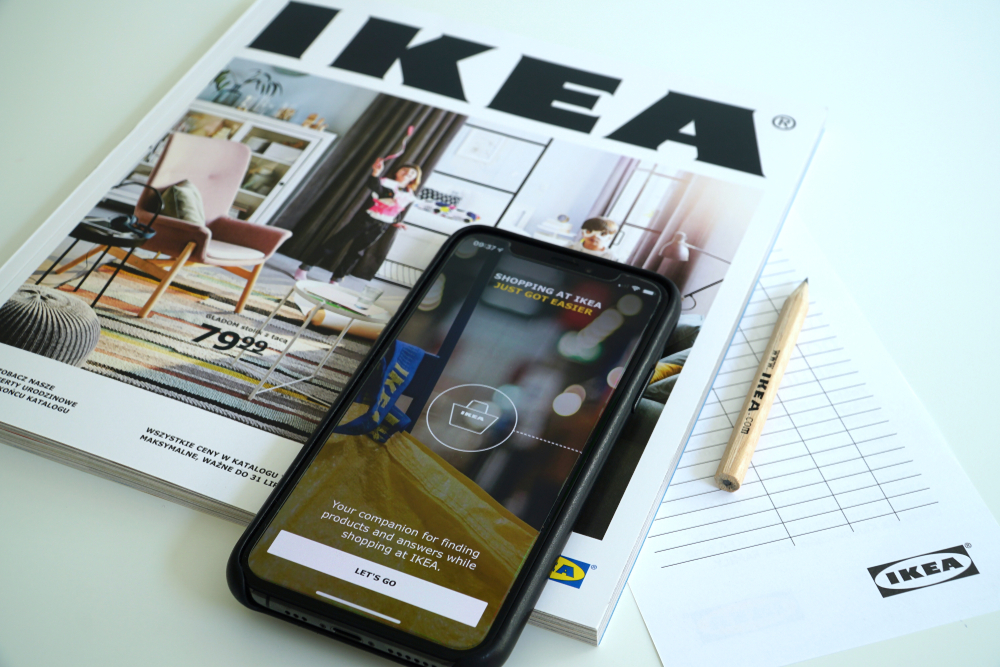
The Swedes can do more than just build good furniture: IKEA now also sells insurance, albeit in far fewer countries. First of all, it's Switzerland's turn, and insurance is already being offered in Singapore. These are sold online, for which IKEA has set up its own channel. The product is called? Hemsäker ?, which comes from the Swedish words for? Home? and sure? is composed.

This insurance product combines the areas of household insurance and, as usual, private liability insurance. The Swiss even have a big advantage here: They can take out liability protection individually and are not tied to the combination product. In Singapore, on the other hand, people have to take both products because they are not available separately.

Adjusted prices at IKEA

As with furniture, IKEA is trying to be comparatively cheap with its new insurance product. The prices for the policy are therefore also adapted to the components that make up the scope of benefits. The customer can select these modules according to his own specifications and thus adapt his insurance cover individually to his needs.

Members of the IKEA family program have a particular advantage. IKEA advertises them with a voucher that is issued after a year without a claim. The aim should be that minor damage should be paid out of pocket without the insurance having to pay for it.

IKEA as a helper in everyday life

Who doesn't know the Swedish furniture store's slogan:? Make your life more beautiful !? This is exactly the plan now, whereby IKEA sees itself primarily in the role of everyday helper. Because the policies can be offered and taken out online, people should be saved from unnecessary trips. It is interesting that IKEA is not really acting as an insurance partner, but that it is Iptiq. The subsidiary of the reinsurer Swiss Re from Switzerland enables the Swede to offer such a service in the first place.

Conclusion: IKEA as a helper for insurance issues

How fitting that IKEA presents itself as an everyday helper in insurance matters relating to private liability and household contents insurance, as the Swedish furniture store has long since made a name for itself with the special service in terms of furnishings. Everything is interrelated and the help for a beautiful, safe home can be seen everywhere.

How good or bad the range from IKEA is currently not entirely clear. Also, no one knows for sure whether it will be possible to book in countries other than Switzerland and Singapore. In any case, the fact is that there are already differences and in the Asian region both insurance modules can only be booked together. In Switzerland, on the other hand, customers can opt for one module.

divide

Find household and personal liability insurance

Compare all providers in Switzerland quickly and free of charge.

These articles might also interest you:

Animal Insurance: Necessary or Superfluous?

Animal Insurance: Necessary or Superfluous?

As long as the beloved four-legged friend is doing well, hardly anyone thinks about the costs that can arise in the event of illness. But when this happens, many pet owners are surprised: four-digit amounts are waiting to be paid! Animal insurance could prevent nasty surprises.

Expensive four-legged family members

A dog that becomes around 13 years old costs up to 25,000 Swiss francs in the course of its life. A cat costs at least half, and it gets even older. The costs do not include the purchase price for the animal, only the costs for feed, care and regular veterinary visits are included. But the four-legged friend may not be healthy for life and the veterinarian's treatment costs are high.

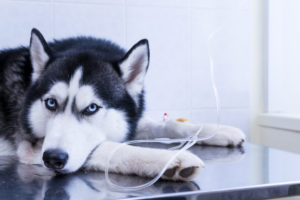
Three to four-digit amounts can quickly be found on the invoice, which usually has to be paid on site. Maybe there will be an emergency and the veterinary clinic has to be visited? Then there are emergency fees and maybe even double fee rates. An accident or illness of the four-legged family member can quickly result in high costs. Who then wants to decide that the animal should be euthanized even though it could be helped with the right medical treatment?

Animal insurance is sometimes recommended

Since unexpectedly high costs can be a financial challenge for many pet owners, pet insurance can be useful. Here the pet owner pays a fixed amount monthly or annually. In the event of an insured event, the insurance company will cover the costs of treating the dog or cat. However, only up to an agreed maximum amount and sometimes only for limited cases per year.

In addition, the pet owner often has to pay in advance and can only settle with the pet insurance later. However, given that cancer treatment for dogs or cats can cost four-digit amounts, many pet owners still opt for insurance. Around three percent of dogs and cats in Switzerland are currently insured, but insurers are reporting an upward trend.

Everyone has to decide for themselves whether or not animal insurance is recommended in individual cases. It is important to take into account the fact that not every case can be insured or that some risks are excluded. Experts usually recommend insuring animals that are materially or immaterially very valuable, although with some insurance companies the animals can only be insured up to the age of six. Animals once insured remain in the insurance until they die. It is then no longer possible for owners of older dogs and cats to insure the animals. You should definitely put money in the savings bag on a regular basis in order to be prepared for the worst case scenario.

Please consider the insurance

Not only the question of whether the animal is insurable is relevant, but also the question of how high the co-payment is in the respective insured event. The insurers offer different products and solutions here, so that there is the right product for every budget. As a rule of thumb, however, a very low contribution usually leads to limited benefits or a very high deductible. In addition, most insurers do not insure any alternative treatment options; there may also be restrictions in terms of surgical interventions or drugs to be administered. This should be checked carefully before signing the insurance policy!

Conclusion: animal insurance is recommended in individual cases

More and more animal insurers are entering the market and trying to sell dog and cat health insurance to pet owners. But the product, which sounds so promising at the beginning, is not always really suitable. Some risks can be completely excluded in individual cases, while others should be included in the insurance.

In this regard, the provider should be checked with his product. However, experts generally advise not to blindly insure every pet, but also to let the material or immaterial value decide.

divide

Find animal protection

Compare all providers in Switzerland quickly and free of charge.

These articles might also interest you:

Lockdown: Lack of exercise threatens the Swiss

Lockdown: Lack of exercise threatens the Swiss

Exit restrictions, work from home and closed fitness studios: Those who do not exercise disciplined themselves should have long since suffered from a lack of exercise. Now the WHO is also warning against permanent too little exercise. This could lead to serious complications.

Exercise up to five hours a week

General recommendations are that adults need between two and a half to five hours of exercise per week, which is already very low. After all, that doesn't even mean an hour of exercise a day! This involves moderate to intense exercise, which includes walking as well as jogging, cycling or swimming.

But the sports facilities that have been closed for so long prevent the regular exercise, which many Swiss felt obliged to do because they? After all, a fitness subscription? had. The lockdown is a welcome excuse and, for many, a real reason for not moving enough. It is even worse for children and adolescents, because they should be active for at least an hour a day. Most of them do not achieve this goal anyway and certainly not at all now, in times of lockdown.

The WHO assumes that around 80 percent of children and adolescents get too little exercise during lockdown, and that it can be even more for adults. Physical activity is crucial for health and wellbeing to occur. This could extend life by a few years, as WHO chief Tedros Adhanom Ghebreyesus explained. Regular exercise is also the key to preventing further illnesses, especially type 2 diabetes and cancer are mentioned here. Exercise strengthens the immune system, which would ultimately also help in the fight against corona.

Exercise prevents other diseases as well

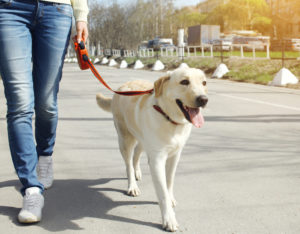
Sufficient exercise strengthens the body and increases the performance of the lungs and heart. Symptoms such as depression or anxiety can at least be alleviated through exercise. It is not about doing competitive sports, it is enough to be really active. The dog does not take a stroll, but the walk becomes a brisk march. Children romp in the playground or can let off steam on a walk through the great outdoors. Scientists assume that sufficient exercise also promotes memory, so both body and mind are kept on their toes by exercise.

Insufficient statistics available

How little everyone really moves is not yet clear; the effects of the pandemic in this area are still relatively little researched. However, the WHO is already warning that the number of diseases that can be traced back to a lack of exercise could soar. Many people are still forced to work from home. This eliminates the way to work, which could be seen as an additional movement. The normal routines of daily exercise still fall away.

The WHO is now concerned and estimates that the cost of health care for people who become ill due to sedentary lifestyle could reach 45 billion worldwide. In addition, up to five million additional deaths per year could be prevented if people were to exercise more.

Conclusion: Underestimated effects of the pandemic

Most people underestimate the time of the day that they spend sitting. For them, it makes sense to use fitness trackers that specifically show how much the person wearing the tracker has moved during the day. This allows the general daily movement to be measured and the person concerned can see immediately where he needs to improve. Without more exercise, which is so important in Corona times, numerous other diseases can soon occur, which are ultimately also corona-related, even if not caused by the virus.

divide

So you pay nothing for your fitness subscription!

Do you want to know how to get a fitness subscription for free? We would be happy to inform you!

These articles might also interest you:

Good resolutions for 2021: save or invest?

Good resolutions for 2021: save or invest?

They are set up every year at the turn of the year: the good resolutions. Not all are followed, but they are always similar. More fitness, more savings, more healthier lives. And maybe this year too: invest more?

The psychology of success

The psychologists have come up with their own name for the feeling of happiness that arises when a project is successful. Here comes the? Psychology of success? to carry. This refers to the feelings of happiness that arise when a good resolution or a firm plan is actually put into practice. Those who can also fulfill their plans strengthen their self-confidence and self-confidence. There is a feeling of elation, which should certainly not be unimportant at the moment.

Usually, however, there are hurdles in the way: there is a lack of time, money or energy. But at least the factor of missing change can be gotten out of the way if savings are made consistently. The time of saving does not have to be a time of deprivation, rather it is about saving in the right places and avoiding unnecessary expenses.

First get an overview

If you want to save or invest, you first have to know how much money is available. The following points are important:

    • Which ongoing expenses have to be taken into account?
    • What does insurance cost?
    • Are Loans To Be Repaid?
    • How good are the conditions for your own loan and for comparable loans?
    • How high are the monthly expenses for little things (books, concerts, souvenirs, etc.)?
    • What expenses do I have for birthdays and similar obligations?

Only if you know exactly how much money is needed per month can you see what is left to save. In most cases the income exceeds the expenses and yet at the end of the month the money is gone. The only thing that helps here is to keep a budget book to find the hidden expenses. Please also take into account the costs that arise not monthly, but quarterly or annually!

Possible expenses for savers

The mere intention to save is usually unsuccessful. Rather, a goal must be set. Maybe you want to visit a certain destination on vacation, buy a new car or repair the house is necessary. Perhaps a dental correction is also desired that is long overdue, but which the health insurance does not pay for. No matter what: It is only important that a specific goal is set and that savings are made for this.

How long you have to save is shown in the previous income-expenditure calculation. The entire amount that theoretically remains should never be used as a savings amount. Too quickly, special editions destroy both the savings and the motivation!

Frequent reasons to set aside money or even take out a loan are your own further training or renovating your home. Further training in particular can cost several thousand francs and, as a cost-saving measure, usually has to be planned and implemented for a long time. Often the measure itself has long been completed, but financial rehabilitation is still not tangible. The same applies here: Consistent saving is the order of the day! At the same time, investing in one's own education or in valuable goods creates the feeling of elation described above.

Conclusion: Saving and investing ensure happiness hormones

Nobody has to be addicted to shopping to know that investing makes for happiness hormones. The main thing is that the implementation of a good resolution is fulfilled. For example, anyone who undertakes something at the turn of the year, works consistently towards it and fulfills a wish, follows the? Psychology of success? and feels motivated to implement other good resolutions.

divide

Credit comparison Switzerland

Calculate credit and compare all providers

These articles might also interest you: