Rising premiums: The doctor can no longer be found in the family doctor model

Rising premiums: The doctor can no longer be found in the family doctor model

Various health insurances have the family doctor model, in which the insured person has to pay fewer premiums. Conversely, it can be expensive if the doctor in question disappears from this model.

New family doctor or pay more?

Insured people are hit again and again: they suddenly receive a letter from their health insurance company stating that they have to look for another family doctor. The doctor chosen so far can suddenly no longer be found in the family doctor model. An alternative to this is to pay higher premiums, which can be 13 percent and more. If it is not just an insured person, but a couple or even a whole family, the change is money.
Many insured people would prefer to switch to health insurance because they want to stay with their doctor and still want to take advantage of the family doctor model. The health insurance companies want to prevent this and do not dismiss their members. You may offer them to switch to the phone model and then the higher premium will have to be paid. A change of health insurance is only allowed when the insurance year is over. The insurance thus excludes extraordinary termination and insists on the proper termination of the insurance contract. Very annoying for all insured persons who have to pay more money by then.

Change of health insurer legally prevented?

This raises the question of whether preventing an extraordinary termination is even lawful. After all, the performance of the health insurance changes and then the insured should be granted a right of termination! Far from it, because the corresponding conditions are in the small print. These state that by choosing the family doctor model, the insured also agree to the applicable insurance conditions and these in turn include the refusal of the extraordinary right of termination because a doctor has left the family doctor model.
The health insurers argue that there are always changes and that doctors could give up their practice or retire. Perhaps the doctor has not adhered to the applicable guidelines on quality of treatment and must therefore be removed from the list of general practitioners. If the insured were to terminate each time, it would not only be a financial disaster for the insurance company, but also in terms of administrative effort.

A common reason GPs disappear from their health insurance list is related to the costs they billed. In the eyes of the insurance company, the doctor causes excessive costs that have to be borne by the health insurance company. As a precaution, the Santésuisse health insurance association checks annually whether the doctors are not overcharging. Anyone who becomes conspicuous has to explain himself, in the worst case even a court case may be pending because of these costs. For the insurance companies, on the other hand, there is no must, they can choose who they want to put on their family doctor's list. This in turn harbors a certain risk for the insured, as Morena Hostettler Socha also knows, her character as an ombudswoman for health insurance. If a doctor is struck from the family doctor list, the insured persons concerned have to switch to the standard basic insurance, which gives them the freedom to choose a doctor. That sounds good, but the costs involved are so high that switching to another health insurance policy is worthwhile by the end of the insurance year at the latest.

Conclusion: No right to extraordinary termination if the family doctor is excluded

If the previous family doctor is removed from the list of family doctors by the health insurance, this is bad for the insured. You have to switch to the more expensive basic tariff and until the end of the insurance year you have no option to switch from one insurance to another. But they have to pay more for this, because the basic tariff is usually significantly more expensive than the family doctor model. This change will be expensive for families, but they have no legal remedy.

divide

Compare health insurance companies

Compare all health insurance companies quickly and free of charge.

These articles might also interest you:

Where is the Wefox app? Neotralo remains as an alternative

Where is the Wefox app? Neotralo remains as an alternative

Wefox leaned far out of the window and raised many millions of francs. CEO and founder Julian Teicke recently promised that the company's growth would amount to around 300 percent per year, it was reported by numerous customers and brokers. But now at least the Wefox app has disappeared silently and without a sound. Apparently nobody knows where she is.

Wefox as a money machine?

Wefox had set itself the goal of connecting insurance brokers and private customers while keeping everything as simple as possible. The latest achievement was the Wefox app, which should be able to easily manage all insurance contracts via smartphone. CEO and founder Julian Teicke never tired of always pointing out the great achievements and the good status of Wefox. Around 400 people were still employed there in 2020, 42 of whom worked in Switzerland. The turnover for 2019 should amount to around 130 million dollars, there should be around 2,000 brokers and 500,000 customers. Unfortunately, at least the Wefox app was probably not so well received, because the ratings in the various stores were unanimous: poor service, poor accessibility and little more than the absolute minimum in terms of support. It's different with neotralo with its app, which not only promises the digital management of insurance contracts, but also keeps it and is now the only alternative after the disappearance of the Wefox app from the market. It's also worth it, but more on that in a moment.

The Wefox Group was founded in 2015 and has been able to steadily increase its annual turnover level. It is now active in six countries and raised the record sum of 125 million US dollars in a B series in March 2019. This was one of the main reasons why international investors became aware of the company. Above all, the subsidiary of the same name and ONE Insurance were the driving forces behind the expansion. Then came the focus on the digital distribution channels through which brokers and customers around the world were to be connected. ONE Insurance was soon recognized as the fastest growing insurance provider. Independent insurance brokers got together and from then on could be found at Wefox.

Then came 2020 and not the crisis like for everyone else, at least not for Wefox. Allegedly, the funding for Getsafe in the amount of 25 million euros was the largest Insurtech funding, but then everything turned out differently. Wefox came back on the scene and collected around 100 million in September. 25 million was booked as a loan, 75 million as a convertible loan. This event leads to the conclusion that Julian Teicke has done it again. He is always considered very brisk, but he seems to get along with funding. He describes himself and his company as a unicorn, which refers to companies that are already classified as start-ups with a value of around one billion euros. In the fintech industry, this has so far only been the case for N26, at least for those that were launched after 2010.

All well and good, but?

? is all this really true? Even if the CEO of the Wefox Group publishes such full-bodied announcements and throws figures around him that make other companies green with envy, some of them cannot be understood. Because: the numbers may be correct, but they cannot be verified. The associated annual reports are not publicly available, which makes it impossible to check them. In addition, it may seem strange that Wefox is allegedly setting up new financing with 100 million euros, but that it has been kept silent about it. Shouldn't one be proud of the achievement and present it in public like others? For reasons of prestige alone, it is not understandable to hide such funding. According to experts, one reason could be that debt capital is often perceived as less good and consequently does not sell as easily. A capital increase would be the better alternative, but it just wasn't there. But maybe Wefox will want to top it up again in the coming year and then publish an even higher sum. However, the history of Wefox also shows that although many things are possible what the company has set out to do, not everything works out. An example of this is the expansion to Asia, the USA and also to Great Britain, which flopped. Another example could be the Wefox app, because it looks like it has disappeared overnight.

Where is the Wefox app?

The Wefox app is suddenly no longer available and cannot be accessed via the Google Play Store or the Apple App Store. However, this only annoys people who want to register as users. Much more affected, however, are Wefox customers who had previously relied on the service and were now sent off with an email. It said that a restructuring had been carried out and that the cooperation between Wefox and the consultant was ending. From now on, access to the Wefox app should be deactivated. Nothing there, because of the? Digital management of all insurance contracts ?! Kindly there was some additional information that should explain some things to the (now former) users of the app. It was pointed out that the previous advisor was still available and was still the point of contact. What was kept secret: Access for the consultant was also deactivated. He can only access the documents available in order to even carry out his work as a consultant. As an aid, Wefox said that the contact details for the consultant that were given in the initial information could be used. Nevertheless, there is still no access to the data on the part of the user.

Existing insurance contracts should not be terminated because they were only concluded via the app, but there with real insurance companies. This in turn means that customers will continue to be insured and that nothing will change in the contracts. However, you can no longer manage them just like that. A direct inquiry with the consultant is necessary, who is likely to face a flood of inquiries in the foreseeable future and for that reason alone will hardly be available directly. The simplifications made possible by the Wefox app have now been withdrawn and clear problems have given way, at least during the changeover period. The question arises as to what actually happens to the data stored in the app. These are stored by Wefox for a certain period of time, after which they are deleted.
Theoretically, Wefox's customer service, which can simply be contacted by email, can still be reached. However, customers had previously complained about problems with accessibility, so it is to be expected that the sheer number of inquiries is likely to exceed the capacities of customer service.

Wefox says that himself

Wefox recently wrote to its brokers and informed them that all cooperation agreements had been terminated. A restructuring was carried out because a new strategic direction was being planned. This would mean that operational activities with the brokers would no longer be possible, and their customers' pension applications could no longer be transmitted to Wefox. At the same time, the brokerage fees were canceled, which means that no more sales are possible via the app. At the same time, it was announced here that the app was deactivated on February 28th and that the brokers would no longer have any means of accessing, managing and looking after customer accounts. It will remain in the notification that Wefox will contact the broker when new contracts are in place.
For the brokers, this means that they have been completely unexpectedly released from their obligations as contractual partners, but at the same time they will no longer collect any commissions.

Neotralo as an alternative?

Now customers and brokers are on one side, Wefox on the other. Understandably, one is extremely annoyed with the current situation, as there was previously no evidence of this development at Wefox. Apart from the short notifications, there was no communication, everything was handled clandestinely in the background. This is a method that neotralo does not rely on. The strongest competitor of the Wefox app to date offers an alternative and a similar concept with its own neotralo app. With the difference that the main focus here is on transparency. So far, around 250 brokers and more than 5,000 customers have been using the app, although it is to be expected that their numbers will skyrocket. Since it was founded in 2019, neotralo has grown slowly but steadily and is now one of the few neutral comparison portals in Switzerland. With the neotralo app, you are also following the path of the digital age and rely on people preferring simple solutions. The neotralo app offers the possibility to manage the insurance contracts clearly on one platform and to manage them from here. The comparison of conditions is just as possible as advice directly from an expert broker. If necessary, new contracts can be concluded or existing ones can be expanded or changed and adapted. The basic principle of the neotralo app is therefore comparable to that of the Wefox app. However, the focus here is on running a reliable app that does not depend on immense funding. Better slow, steady growth than complete overconfidence! Accordingly, the neotralo app is currently the only alternative to the Wefox app, which is actually considered useful, to be found on the Internet.

Interesting new messages

The most important tops and flops in the insurtech industry were recently announced. Wefox was once again highlighted, especially the digital subsidiary ONE was mentioned in praise. This offers both household and liability insurance as well as motor vehicle policies. Allegedly ONE was able to record a growth of more than 500 percent, which led Oliver Lang, in his character to CEO of ONE, to state that no other digital insurer came to half a million contracts so quickly. Allegedly they were already on the way to break-even in 2020, in 2019 the loss was only two million euros. It is assumed that 2021 will also run well and that the sales mark of 100 million could be topped for the fourth year in a row. It was only in February that ONE Versicherung AG was renamed Wefox Insurance AG and the individual business units are now being reorganized by Julian Teicke. A new subsidiary is already planned, which will be named Koble and will provide the programming interfaces. The subsidiaries and the wide range of products make Wefox one of the best-rated Insurtech companies in the entire DACH region. Teicke is now even planning to go public in the near future and wants to attract a wide range of investors.

But how does the surprising attitude of the Wefox app fit into this concept? Has the digital offer fallen victim to this brand changeover? Those responsible speak of a restructuring as the reason for deactivating the app, but if it supposedly ran so well, was so heavily frequented and made everyday insurance easier for so many people, why then this route? At least the question arises here, why you couldn't communicate with customers beforehand and swear them to the way ahead. Why were they completely surprised and now have to coordinate their well-ordered insurance contracts themselves or turn to the broker, who should be hopelessly overwhelmed in view of the situation? Questions about questions that will hopefully be answered soon by those responsible.

Conclusion: Wefox could not be quite as successful as shown

It is certainly speculative to claim that Wefox has taken over with its offers and reported a little too grandly about its successes. What exactly is behind the sudden deactivation of the app offer is not (yet) known. In any case, it came as a surprise to everyone involved and they understandably feel taken by surprise and let down. The only alternative currently available is the previous competitor offer of the neotralo app, which relies on transparency and communication instead of big words and hidden deeds.


divide

These articles might also interest you:

The culture of complaints in Switzerland

The culture of complaints in Switzerland

In 2012, the Swiss Complaint Center was founded in Zurich, providing advice on all questions relating to complaints. The templates for complaints provided on the website have now been downloaded more than 130,000 times.

Independent complaints office: The Motz headquarters in Zurich

Colloquially, a complaint is often referred to as? Moaning? so it is not surprising that the complaints center based in Zurich is also called Motz headquarters. This contact point, which is actually intended to provide help to consumers, should be viewed with caution, because it offers a good target for companies with a rather dubious reputation. At the end of March 2018, Top AG Ltd. has already filed a criminal complaint for defamation because the company had moved up to first place in the 2018 complaint barometer.
Once the service of the complaint center consisted of a telephone consultation, letters of complaint were written and the complaint barometer could be published on the Internet. Today there are several of these complaint offices, but there is still one Motz headquarters, which has gained numerous findings from previous work.

One of these findings is that a forwarded complaint and the publication of reports from those affected may not be sufficient in every case. There is only success if the company concerned, to which the complaint relates, is working seriously anyway. They want their customers to be satisfied and, in turn, invests their money in professional complaints management. The really difficult cases are in companies that like to ignore complaints and want to avoid their duties. They use legal loopholes and rip off customers by using delaying tactics. Without legal assistance it is difficult to achieve success here.

Problems for the complaint center

The Swiss Complaints Center has already learned several times in the past how intimidating some companies are. But thanks to Dextra Rechtsschutz AG, the Motz head office was able to successfully defend itself against the intimidation attempts and has therefore learned that the greatest success for customers is only possible through legal assistance and a letter from a lawyer or a law firm. This is why the complaints center has entered into a cooperation with WILD Rechtsanwalt AG and can therefore support customers much better. You will now receive a complaint letter as well as initial legal clarifications on the legal facts of the respective case. If it is a question of a higher amount of damage or if all options have already been exhausted, the legal advisor can file a complaint and thereby assert the claims. Often, for example, claims due to flight delays and flight cancellations have to be processed here.

At the beginning of 2017 there was trouble for the complaints center Switzerland, which was put under pressure by two law firms from Zurich because blog posts and information about the business conduct of Top AG Ltd. should be deleted. This then filed a criminal complaint in 2018. Nevertheless: In spite of all attempts at intimidation, the complaints center publishes its research on the company every year and also provides the business model of Top AG Ltd. represent.

More and more customers are being deceived by Internet offers and are being blinded by supposedly great offers that are not that great at all. This trend has been evident since 2017 and continues year after year. Some companies are noticeable as frequent causes of complaints; these are shown at the top of the complaint barometer. It is now important to help affected customers and to inform other consumers about the business conduct of the companies, a task to which the complaints center Switzerland is fully committed.

Conclusion: Switzerland's complaint center as a savior in an emergency

The Swiss Complaints Center repeatedly proves itself to be the savior in times of need and ensures that customers get their rights by drafting complaints and providing legal support. Some companies turn out to be dubious or use every legal hiding place to protect themselves against complaints. These companies are shown in the annual complaint barometer, which is intended to warn other customers. Despite the intimidation attempts to which the Motz headquarters has already been exposed, it continues its work and is therefore a valuable support for consumers.

divide

Find legal protection insurance

Compare all providers in Switzerland quickly and free of charge.

These articles might also interest you:

Is the Generali disappearing from Switzerland?

Is the Generali disappearing from Switzerland?

The insurance company Generali from Italy is allegedly thinking about how useful it is to continue to be involved in the Swiss market. Concrete options are now being examined as to what the task of dedicated consultants is. A sale may also be an option.

Isn't Switzerland lucrative enough?

Allegedly, the reasons for thinking about the insurance company are that Switzerland does not offer a particularly promising market. So consultants are now sounding out whether a sale makes sense? completely or partially ? out. However, the discussions on this are still in a very early phase, so nothing definitive can be said yet.
Generali has around one million customers in Switzerland and has annual premium income of around two billion francs. The profit was also impressive and was around 194 million.
The speculation continues: If the life insurance portfolio were to be sold, it could generate up to two billion euros in the coffers. The reason: The life insurance business is considered to be extremely capital-intensive and other large corporations have already separated from this sector. The buyers are those companies that specialize in exactly this and handle such portfolios.

The same applies to Generali: Corona is the biggest problem

The largest insurer in Italy, Generali, is struggling with the consequences of the corona crisis. In the first quarter of 2020, the drop in profits was particularly pronounced: only 113 million euros were received. In comparison: in the previous year it was around 744 million euros in the same period. The securities in particular were the problem, because they lost massively in value. As a result, operating profit also fell massively, although it is still not possible to estimate how far the crisis will really have an impact and how deeply profit can fall. The group is now trying to counter the crisis with extensive savings. Nevertheless, the group expects massive problems from Corona, although the crisis will continue into 2021 and there will hardly be any increases in profits or at least adjustments to profits. The crisis puts the insurer in a mess as well as others, because the damage is much higher, plus the loss of dividends and a lack of rental income. Victims of the pandemic and representatives, however, must be compensated; they are entitled to the promised aid payments. And what is the management of the insurance group doing? She responds with savings, designs cost-cutting programs and lets agents travel less. In conjunction with so-called natural reductions (for example, no more new hires if employees are lost due to termination or retirement), the necessary funds should be made available.

Conclusion: Generali life insurances in crisis

Like other insurance companies, Generali's life insurance suffers. The insurance group is expected to try to raise the necessary funds through a sale of the insurance division? Life insurance? and is even considering withdrawing from the Swiss market entirely. Commissioned consultants are currently examining whether this plan will actually be implemented or not. A final decision is still pending.

divide

Find life insurance

Compare all providers in Switzerland quickly and free of charge.

These articles might also interest you:

These are the mistakes you should avoid in making your dream of owning your own home a reality

These are the mistakes you should avoid in making your dream of owning your own home a reality

Do you want your dream of your own house to come true? Then there are a lot of stumbling blocks waiting for the builders. There are some mistakes that are made all too often and that can be very expensive, but which can easily be avoided with the necessary prior knowledge.

Requirements for future property owners

Obviously, anyone who wants to build a house or buy a condominium needs money. In addition, sufficient equity must be available, whereby around 20 percent of the purchase price can be assumed. This is exactly where the first problem lies, because the bank's valuation does not have to correspond to the purchase price of the property. That means: the demand for real estate is high, the interest level is low. The price has risen enormously recently, with many sellers wanting to sell their buildings at exorbitant prices. The bank, however, sees the matter in the long term and would like to secure the mortgage loan for a long time. She will evaluate the object separately and sometimes comes to different values than the seller. The resulting differences between the purchase price and the determined lending value of the bank must be secured by the buyer's own funds. However, these are often not taken into account in the planning.

An example: The property is to cost CHF 800,000 and equity of CHF 200,000 is available. In order to calculate the affordability of the property, the purchase price, equity and income play an important role. Affordability is calculated using imputed interest rates that are significantly higher than the normal mortgage rate. They are located at around five percent, although the individual banks differ slightly on this point. The reason for this high value is very simple: if interest rates rise again, the financing is still secured because it was calculated from the outset on the basis of the less favorable interest rate. The bank now finances a maximum of 80 percent of the purchase price and divides the amount between two mortgages. The first amounts to more than 66 percent of the total, the second to a maximum of 14 percent. The second mortgage has to be repaid within 15 years, whereby the latest date of entry into retirement age is shown.


In addition, the ancillary costs and the costs incurred for maintaining the property must be included. The bank will assume around one percent of the purchase price.
It is now assumed that the monthly burden of interest, amortization and ancillary costs should not exceed a third of the gross income of the borrower. In the above example, this would have to earn around 10,700 francs a month in order to be able to make all payments if the imputed interest rate of five percent is calculated. This shows that a mistake made by many willing borrowers is to underestimate the monthly burden. The demands on borrowers are high!

Avoid typical mistakes

For some people, a house or condo is just a way to live. Such a property is usually associated with emotions and quite a few people literally fall in love with a house that they then absolutely have to buy. But one of the worst mistakes is to give in to that infatuation and buy a house that you can't afford. The threat of over-indebtedness quickly kills love!

Another mistake is not to make provisions. A mortgage is taken out for a very long period of time and it is almost certain that interest rates will go up at some point. Anyone who has received the loan should therefore always make sure to set up regular provisions in order to be able to absorb any increases in interest rates. So you can look more calmly into the future!

In order to get the necessary equity, another mistake is often made: Money is withdrawn from the pension fund, which consequently offers less performance. Not really a problem, but sooner or later it must be possible to close the gaps that have arisen. Otherwise, the money would be invested in the dream home now, but the money would be missing later when you draw your pension. And then maybe the sale of your home is threatened because it has simply become unaffordable.

Conclusion: The biggest mistakes are in the financing

The worst mistakes a builder or homebuyer can make are planning their financing. This is usually approached too tightly, so that the equity capital actually required is not available. Or the credit burden of a maximum of one third of the gross income does not fit, more money is needed for the mortgage. This in turn leads to frustration and, in the worst case, to insolvency for all other payment obligations.

divide

Find the best mortgage

Compare all providers in Switzerland quickly and free of charge.

These articles might also interest you:

Household contents insurance: Up to 60 percent difference between the providers

Household contents insurance: Up to 60 percent difference between the providers

Household contents insurance is certainly one of the most important types of insurance. But the costs for this differ enormously depending on the provider. A comparison of the providers shows a difference of up to 60 percent.

Don't be blinded by great offers

As always, a lot is promised in advertising. What to think of this is a completely different matter. For example, there is often talk of a combined discount, which offers benefits for taking out combined household and personal liability insurance. Nevertheless, a comparison shows that the premiums for these combination offers are sometimes up to 60 percent higher than for individual insurance policies. However, the insurance benefits are equivalent.

An example: With Smile Direct, home insurance costs 167 francs for a single who wants to insure a value of 80,000 francs. Mobiliar's private liability insurance costs 116 francs. If these insurances are combined, they cost CHF 283. However, if you take out the combined package with Zurich Insurance, you pay a premium of 431 francs, which is significantly more expensive. Even the combination packages that are offered by a very affordable insurance company are more expensive than individual insurance policies in-house.

It's worth taking a closer look

Some insurers advertise with particularly low combined offers and offer, for example, a discount of 10 percent. But this means that the insurance as a combination variant is still significantly more expensive than when the insured person looks for another provider. Even with the same provider, can individual insurance be cheaper than a combination of the two? admittedly necessary? Insurance. Even with shared apartments, the insurance combinations are not cheaper; even with offers for families, these are cheaper to take out individually.
Experts therefore recommend carefully checking the offers in any case and just not necessarily concluding them where discounts are attractive. Even if these seem to be lucrative at first glance and seem to push the premium far down, it is the individual insurance policies that are better to take out and where the most money can be saved.

Tip: The big insurers do not act any differently here and try to dazzle with bait offers. It is certainly easier to run the insurance with one provider and not have to deal with several insurance contracts. In the long run, however, you can save a few francs if you invest in individual insurance instead of combined packages.

Conclusion: It is worth taking a closer look

If you want to save money on insurance, you should definitely take a closer look. Because: The offers are often only intended for advertising purposes and are not really aimed at saving the insured person money. A closer comparison shows in some cases differences of up to 60 percent, which make combination insurance more expensive than individual products. It is undisputed, however, that both household contents and private liability insurance are among the most important types of insurance and must be available in any case. Therefore: it is better to invest a little more time and effort in the comparison before taking out the insurance and save a lot of money for it!

divide

Find household and personal liability insurance

Compare all providers in Switzerland quickly and free of charge.

These articles might also interest you:

Pet boom in Switzerland?

Pet boom in Switzerland?

Never before have so many pets been sold as now during the pandemic. Breeders even say that there are around 100 interested parties for every five puppies. The demand for pets is also increasing enormously in animal shelters and in pet shops.

Corona puts people on dogs (and cats)

Dogs and cats in particular are in greater demand than ever before, which is mainly thanks to the lockdown caused by the corona pandemic. Pets are now seen as social partners, bringing employment and distraction. In addition, for example, the master can go outside with his dog, even if a curfew has been imposed. On various Internet platforms, inquiries about animals that are wanted to buy are increasing and the people who sit at home in the home office sometimes want nothing more than a cuddly fur partner who accompanies them through the lonely time.

Around 8,500 dogs have been reported since the beginning of the pandemic, compared to only around 5,300 in recent years. Breeders are increasingly being written to or called, a litter of puppies has already been sold before it is even born. It is also interesting that people are now increasingly interested in breeding and keeping themselves. Purebred dogs and cats are in demand to become breeders themselves. However, some breeders are already complaining: In some cases, the request will ask whether the dog can be returned later. Dogs are seen as a fashion accessory, are suddenly modern and just have to be there. However, the fact that the animals can live to be 15 years or older is often not considered.

Frequent spontaneous purchases thanks to the Internet

The animal rights activists are now very worried because the dubious puppy trade by breeders in particular has skyrocketed. Many people who have had no luck with a breeder or in an animal shelter turn to a multiplier from the Internet who supposedly sells healthy animals, sometimes at ridiculous prices. There is no trace of the four-figure sums that the serious breeder demands for his puppies, which are raised with expertise and love for animals. The internet is anonymous, there is no question why there is a desire for an animal and where the dog or cat is going. Everyone who buys here supports the dubious trade that lives from factory farming under the worst conditions. The good breeder is concerned about the welfare of his animals and therefore asks so many questions. These are perceived by many inquirers as presumptuous, but the breeder just wants his little darlings to be fine later.
Spontaneous purchases have increased and animal shelters will soon be overcrowded again, fear the animal rights activists. Because when the days of home office and remote work are over, the dogs and cats will be given up again because there is no more time for them. Some will show behavior problems because they did not have to learn to be alone. That alone will be a reason for many new pet owners to part with their furry friends.

Important questions before buying a dog

If you are thinking of buying a dog, you should ask yourself the following questions:

    • Can I even keep the dog in my house?
    • Will I still have enough time for the dog after Corona?
    • Can I keep a dog from a health point of view?
    • Do I want to take care of the dog for the next 10 to 15 years?
    • Do my leisure activities suit the animal?
    • Can I look after the dog on vacation or put it somewhere?
    • Do I have enough experience or can I get the help I need?
    • Are my financial resources sufficient to cover the animal's illness?

Conclusion: Please do not rush to buy pets out of loneliness

The Corona crisis demands a lot from many people and, above all, severely restricts socially. A pet can be the solution, but only if the new owner is ready to look after the animal even after the crisis and can provide optimal care. Otherwise a dog or a cat should be avoided. An animal is not a consolation!

divide

Find animal insurance

Compare all providers in Switzerland quickly and free of charge.

These articles might also interest you:

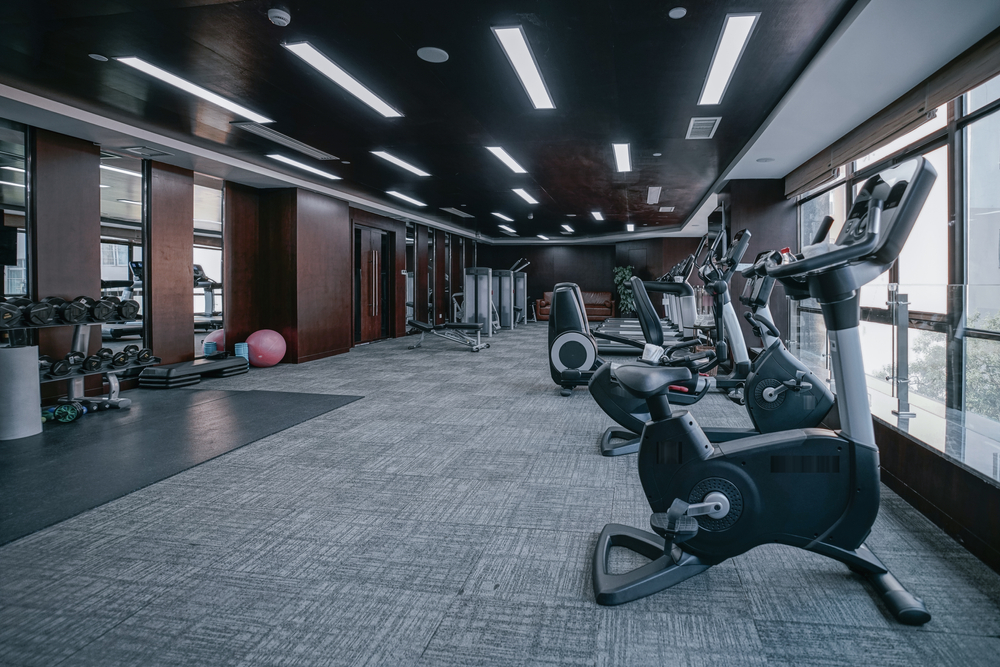
Fitness centers are the losers of the corona easing

Fitness centers are the losers of the corona easing

The Federal Council has decided to gradually lift the corona restrictions. The losers here, however, are all those companies that operate in closed rooms. The same goes for the fitness studios, but the operators now want to defend themselves because the prolonged closure means the death knell for many.

Gyms get no mercy

The Federal Council remained firm in its latest decisions and rejected all requests to be allowed to resume operations in closed rooms. This not only affected restaurants, but also fitness centers, which are now supposed to remain closed until April. It should only be relaxed at shops, museums and zoos. Interiors where people stay longer are considered to be the drivers of the pandemic and places where the greatest risk of infection threatens. For fitness centers, this means that the struggle for survival will continue. Customers have stayed away long enough, because they have long since gotten tired of having to pay for a service that they do not receive. Just out of sympathy, hardly anyone has enough money left to extend their membership in the fitness center.

Fitness center operators are disappointed

Understandably, the operators of the fitness center are disappointed, because after all, sport in closed rooms should only be possible again from April 1st. This means that the time with the highest sales for the studios is over, because they generate the highest sales between January and April. The reason is the good resolutions that many Swiss make at the end of the old year and that they implement in January. One of these resolutions usually concerns the amount of physical activity that should be significantly increased, and a healthy lifestyle in general should also be pursued. But now the fitness centers are closed and in spring and summer most people prefer to do sports outside. In this respect, the loosening from April is no longer of much use, it is little more than a drop in the ocean. The President of the Swiss Fitness and Health Association, Claude Ammann, recently said that the decisions of the Federal Council would mean a black day for the SMEs in the fitness industry, because the extension of the closure is the death knell for many.

Actually, there had been a very lively exchange of ideas about the policy to be pursued and yet no agreement had been reached. The small and medium-sized studios are dependent on the members coming to training, they do not have large financial reserves like the big representatives of the industry and consequently can no longer exist. Running costs still have to be managed, even if there has been no more money in the coffers for months.

The association is defending itself

Now the fitness association is standing on its back legs and is planning a claim for damages against the federal government. It is not just that in many cantons the promised aid money is not paid or is only paid to a limited extent, there is also no equal treatment in the cantons. So there are fitness centers that still have a chance and others that are now running out of breath. The association has already asked for fitness centers to be classified as systemically relevant, but this request had not yet been heard.
The planned lawsuit cannot easily be implemented either, because the hurdles are high. The money for this is now to be collected via crowdfunding. The beginning was made through the many small payments made by employees and members of the gyms.

Conclusion: fitness studios lose in a crisis

Fitness studios have a problem: According to the Federal Council, they will remain closed, at least until April. They do not really benefit from the fact that the Berlin study assesses the risk of infection indoors as particularly high and even certifies fitness centers with a factor of 3.4 when they are half occupied. Like restaurants and secondary schools, they are supposed to be a haven for contagion, which is supposed to be far more dangerous than shops.

divide

So you pay nothing for your fitness subscription!

Do you want to know how to get a fitness subscription for free? We would be happy to inform you!

These articles might also interest you:

Consumption is growing despite the corona crisis

Consumption is growing despite the corona crisis

Meanwhile, one in five Swiss believes that their situation will worsen economically in the coming months, which is a significant increase compared to the survey values from previous years. Nevertheless, consumer spending seems to have returned and the Swiss are again investing more money in various goods.

There is a new desire to consume

Even though more Swiss people than ever believe that their economic situation will deteriorate rather than improve in the coming year, consumer spending continues to rise. However, only about one in four Swiss believes that the financial situation will improve in the coming year, compared to a third in 2020. 18 percent even assume that the financial situation will get worse or significantly worse, which more people are than in the past four years.

Despite all the concerns, the propensity to consume seems to have returned, which experts would hardly have thought possible in view of the high corona numbers and the financial outlook. In the spring of last year many people still wanted? almost half ? refrain from making a major purchase. New furniture and vehicles were not bought. The share fell to 36 percent by the end of the year, many were tired of the savings and now approached such investments with the view that they could not go on vacation. Then why not treat yourself to something at least at home?
So at the beginning of the crisis, people wanted to consume less and focus more on saving. Many people now even state that their consumer behavior will not change, even if Corona would continue for a while. Around two percent of those questioned in the study even want to take out a loan, whereas last spring this figure had shrunk to one percent.

Drop in sales and problems at work

When asked about the reasons for the expected worsening financial situation, most Swiss responded that they were worried about their jobs. Some were already having problems in the workplace and it was to be expected that savings by companies would lead to layoffs. Many people were already on short-time work and accordingly earned less money, others had already lost their jobs or their partner was affected by unemployment. The self-employed had to struggle with a drop in sales and were therefore less able to pay attention to consumption, but were forced to save.

The values were significantly different at the end of 2019, because at that time only a small proportion of less than 15 percent stated that savings were due to problems at the workplace. Others referred to rising health insurance premiums, but a certain lack of prospects was not noticeable at the time. It will be different in 2021, because the ongoing Corona crisis has Switzerland and the world under control and ensures that hardly anyone knows what will happen next. Nobody knows whether the financial bottleneck will be surmountable in the near future or whether it cannot get much worse because the numbers are not falling permanently. Until the success of the corona vaccination is clear and the world can return to normal, consumption will therefore certainly remain limited.

Conclusion: increasing consumer confidence vs. fear of the future

The Swiss are currently divided and, on the one hand, are clearly more willing to consume than last year. On the other hand, however, they have to accept savings, save themselves and do without, because they are forced to do so by short-time working or job loss, for example. Experts assume that debt could rise significantly, because people want to do something good for themselves through purchases that they cannot achieve otherwise. The only thing left here is to hope that the pandemic will end soon.

divide

Credit comparison Switzerland

Calculate credit and compare all providers

These articles might also interest you:

Free trade agreements are profitable for SMEs

Free trade agreements are profitable for SMEs

The State Secretariat for Economic Affairs has published a study on how companies in Switzerland use the free trade agreement. You can save customs duties, which amounts to several billion francs a year. It is mainly SMEs that benefit from the regulations and not only the large corporations, as was once feared.

SMEs have above-average profits

It was once feared that SMEs would be the big losers of the free trade agreement and that it would be the large corporations who would benefit from the agreement. But far from it, as the study by the State Secretariat for Economic Affairs has now shown. In reality, SMEs benefit most from the agreement and enjoy greater freedom of competition. The SMEs are effectively using the agreement to cut tariffs and are doing so in the billions. For comparison: SMEs saved around CHF 1,134 billion in 2019, while large companies with more than 250 employees were only able to save around CHF 728 million. Around 140,000 companies made use of the fact that import duties were lower in 2019. More than 55,000 companies even use the advantages for every transaction.

The greatest savings opportunities for SMEs have come from special products. Paper products and cheese as well as plastics should be mentioned here in particular. The greatest savings are made with imports from Germany, China, Austria, France and Italy, while the greatest savings on the export side are for watches, precious metals and machines. For experts, the data clearly shows that Swiss companies are in a position to make clever use of the advantages offered by the free trade agreement. However, imports from China and Germany show that there is still room for improvement.

The export economy is dependent on the free trade agreement

The export economy benefits to a large extent from the free trade agreement, which has become almost indispensable for the economy. As a result, new sales markets can be identified, and the movement of goods into and out of Switzerland is reduced. The agreement thus ensures better framework conditions with regard to the Swiss economy and also ensures that the competitiveness of Swiss SMEs is maintained and improved. As the Swiss economy operates globally and is strongly networked, this knowledge is of particular importance.
A free trade network is currently being used, which consists of 30 agreements with 40 partners. Its expansion is a central point of all action and the aim is to continuously develop the network. This will also remain important in the future, although the next step has already been taken with the ratification of the agreement with Indonesia on March 7, 2021.

In the future, the free trade agreements are also to be improved, which should be possible on the basis of a broader data base. This is intended to identify new measures with which products with high tariff savings potential are to be promoted. Against this background, the most important thing is the dismantling of industrial tariffs in Switzerland, so that companies can be relieved of administrative burden when importing.

Conclusion: Free trade agreements are a win for SMEs

So far it has always been assumed that SMEs are more likely to be losers than winners in relation to the free trade agreement. But far from it, because they achieve significantly greater savings than large corporations through the agreement. In the future, however, the aim now is to further strengthen the agreement and to achieve greater networking of the Swiss economy.

divide

Insurance for SMEs

Compare all providers in Switzerland quickly and free of charge.

These articles might also interest you: